Showing posts with label hulk. Show all posts

Monday, July 23, 2018

Avengers 4: They're Not Quite Dead


It's been exactly three months since The Avengers: Infinity War hit theaters and turned the whole Marvel fan community upside-down. Practically everyone who's ever seen a film in the Marvel Cinematic Universe is itching for next summer's release of Avengers 4, and directors Joe and Anthony Russo are doing everything in their power to keep the details about it under wraps until then. They don't even want to announce the film's title yet because they say it might spoil the plot. If the Infinity Gauntlet was powered by Avengers 4 details instead of the six Infinity Stones, the universe would still be safe from Thanos.

Because of this, countless fan theories have been popping up all over the internet in the past three months. Most of them center around characters who died in Infinity War and ways that they could come back to life, and while a lot of those deaths occurred when Thanos snapped his fingers with the Infinity Gauntlet to wipe out half the universe, some deaths occurred before that. These are the trickier ones to theorize about since they don't seem as easily reversible as the ones caused by the Snap. However, more and more fans are starting to look at some of these deaths from a new angle: that those characters aren't actually dead.

I could spend days researching and constructing my own theories about every "dead" character, but for the sake of brevity, I'll just talk about three of the more likely ones to turn up alive in Avengers 4.


1. The Collector

There isn't too much to say about this character, mainly because there isn't too much to say about his role in Infinity War. All we see is a brief scene of Thanos threatening him for the location of the Reality Stone, then a reveal that it was all just an illusion cast by the Mad Titan to draw the heroes out of their hiding places. The obvious assumption is that Thanos killed the Collector offscreen shortly before this scene occurred, but there are reasons to think that he didn't.

For starters, the MCU doesn't make a habit of killing notable characters offscreen. The only one that comes to mind is Sif from the Thor film series, who's been absent since The Dark World and was said in interviews to have died from the Snap. This lack of closure was mainly due to Jaime Alexander not being available to reprise her role though, and that clearly wasn't the issue with Beniccio Del Toro. The MCU is one of the biggest film franchises in history; if the screenwriters don't have enough time in one film to properly kill off a character and the actor is still under contract, they can probably afford to save that death for another film rather than just having it happen offscreen.

Second, let's consider the illusion that Thanos cast of himself threatening the Collector. He didn't kill the Collector at the end of the illusion, and their conversation throughout it was very detailed and true to the Collector's character. It's possible that Thanos was reenacting what actually happened when he confronted the Collector earlier, rather than fabricating a conversation off the top of his head. It stands to reason then that just like in his illusion, he didn't kill the Collector in real life. Thanos is a surprisingly merciful supervillain, so if the Collector gave him the Reality Stone without too much resistance, Thanos probably spared him.

The strongest piece of evidence though comes from this piece of artwork, which shows the Collector playing a board game with his brother the Grandmaster:


This is an official piece of artwork created by Marvel Studios for a Guardians of the Galaxy attraction in Disneyland, and it's prompted Studio President Kevin Feige to express interest in featuring the two characters together in a future film. Granted, such a scene could end up being a flashback that takes place prior to Infinity War, but it still leaves the door wide open for the Collector to be alive. Bottom line, his character still has a chance of turning up alive since we never actually saw him die.


2. Gamora

Okay, physically she is quite dead, but I think she's getting better.

Unlike the other pre-Snap deaths in Infinity War, Gamora's had a very spiritual element to it. Thanos killed her as part of a ritual to obtain the Soul Stone, an Infinity Stone with the power to control life and death. Her demise is directly tied to the Soul Stone, and the Soul Stone was the stone responsible for killing half the universe when Thanos snapped his fingers.

That was why he had a vision of Gamora in an orange-tinted realm right after he caused the Snap. Her appearance wasn't presented as a hallucination brought on by his guilt over killing her. It was presented as the real Gamora communicating with him in spirit. She didn't know what had happened until Thanos admitted it to her, and the scenery being orange (the same color same the Soul Stone) implied that her spirit was trapped inside of the stone. Thanos using the Soul Stone to such a huge capacity was probably what triggered Gamora's sudden appearance in the first place.

The Soul Stone is the only Infinity Stone shown in the movies to have any kind of rule set attached to it. You can't just snatch it up and use it like you can with the other five; certain actions have to be taken to prove that you're worthy to use it. You have to follow the rules in order for it to function properly. Because of this, it's entirely possible that an improper use or even a forfeiture of the Soul Stone could cause it to reverse the sacrifice that was made to obtain it and then render the stone unusable once more. This could mean a resurrection for Gamora in the near future.


As for behind-the-scenes evidence, the waters are a little muddier now than they were three months ago. Zoe Saldana is still active on the MCU publicity scene even though Infinity War's theatrical run is over, and Guardians of the Galaxy Director James Gunn has said that Gamora will have a "significant role" in the next film of that series. However, Gunn's recent firing from the project could undo a lot of his story ideas. This might not affect the Guardians characters too much though. Marvel Studios plans their films pretty far in advance, and the timeline of the MCU is so intricate and interwoven now that it would be very difficult to scrap story ideas. If the studio did that, it could cause a butterfly effect that would drastically alter their plans for a lot of future films.

Overall, I still think it's safe to assume that Gamora will come back to life. It's just what she'll do afterwards that's foggy.


3. Loki

I know, I wrote that huge two-part eulogy for him when Infinity War first came out and now I don't even think he's really dead. I still stand by most of what I said in my "Looking Back On Loki" essay, and to be perfectly frank, a part of me still likes to think that the God of Mischief really did meet his poetically poignant end in the first scene of Infinity War. That doesn't change the fact though that the events leading up to his death look EXTREMELY suspicious now.

Here's a rundown of what happens: Thor and Loki are cornered by Thanos, Loki stalls for time — promising Thor that "The sun will shine on us again" — and then he tackles Thor out of the way as the Hulk comes crashing into Thanos. The Hulk and Thanos have a brutal fistfight for several minutes, but not once does the scene ever cut away to Thor and Loki to show us what they're doing. This is odd enough, but what's even more odd is that Thor eventually shows up in the middle of the Hulk and Thanos's fistfight by himself. What happened to Loki?

There's still no sign of the God of Mischief even when Thanos apprehends Thor and kills Heimdall. It's not until Thanos is just about to make his exit that Loki shows up again, and when he does, he almost appears to step right out of nowhere. He tries to kill Thanos, seeming to use the bare minimum of his powers, and then his trick backfires and Thanos appears to kill him. This scene raises so many questions that it gets harder and harder to take at face value every time I watch it.

First of all, Loki's faked his death before in the MCU, and we haven't always gotten a clear explanation of how he did it. We still don't know exactly how he survived his fight with Kurse in The Dark World, so he could very well have survived against Thanos. For all we know, the person that Thanos appeared to kill could have just been a random dead Asgardian that Loki possessed and then projected his appearance onto from a safe distance away. We've seen him do both of those things to some extent before, even without the use of his scepter.


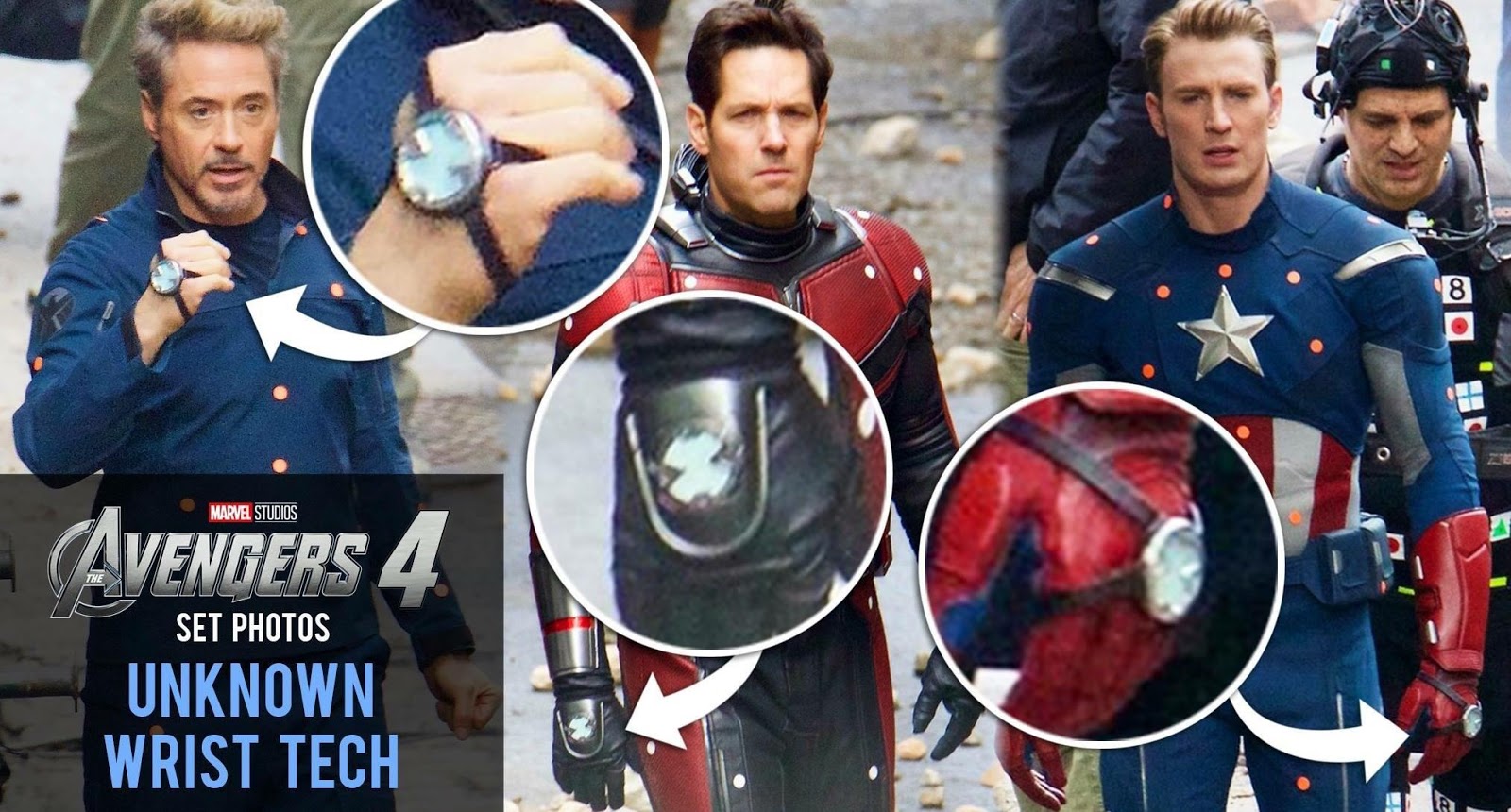
Second of all, photos have leaked of Tom Hiddleston as Loki on the set of Avengers 4. The scene being filmed seems to involve time travel since he has his clothing and hairstyle from the first Avengers film, but it still appears that Loki is supposed to be in the next film. What's more, Tony Stark appears in that same scene wearing what looks to be a disguise, suggesting that the Avengers might go back in time to alter the past or tamper with the timeline in other ways. Maybe the Loki who appeared to step out of nowhere at the beginning of Infinity War was a different Loki than the one we saw tackle Thor out of the Hulk's way a few minutes earlier.

Some might say that these theories are all moot, since Tom Hiddleston has done multiple interviews saying that his time playing Loki is over and that Loki isn't coming back to life in Avengers 4. However, Marvel Studios has a history of releasing bogus interviews to subvert fan expectations. Just look at Ben Kingsley's interviews about playing the Mandarin in Iron Man 3. Those were absolutely meant to be misleading, at least at the time when they first came out. Heck, the Russo Brothers themselves have insisted that Spider-Man and Black Panther's deaths in Infinity War are permanent, and yet both of those characters already have sequels to their own standalone films in the works.


Also, the interviews of Tom Hiddleston saying that his time playing Loki is over are only half deceptive; Avengers 4 is the last film on his contract, not Infinity War, but it just so happens that he was done shooting his scenes for Avengers 4 by the time that Infinity War opened in theaters. Technically there's nothing inaccurate about anything he said in those interviews, but having them come out right after we saw Loki die in a new movie does seem like we're being set up to have the wrong idea.

This is all a prime example of where things stand with the MCU these days. The franchise is so huge, the stakes are so high, and the studio has grown so clever with both its writing and its marketing that we have almost no way of predicting what's going to happen in their films anymore. Some fans may find all of this secrecy and uncertainty maddening, some may find it exhilarating, and some probably take it as even more of a challenge to try and figure out what will happen next. Whatever the case, we'll all probably be more and more eager to see these movies with each passing phase. Not many franchises can stay this engaging after ten years and twenty movies.

And if Marvel Studios has been throwing us more of these curve balls than they've needed to, then mischief managed, I suppose.


Thursday, May 10, 2018

Looking Back on Loki - Part 2


SPOILER ALERT!!

THIS ESSAY WILL ALSO GIVE AWAY THE BEGINNING OF THE AVENGERS: INFINITY WAR. IF YOU HAVEN'T SEEN THE MOVIE YET AND YOU DON'T WANT ANYTHING IN IT TO BE RUINED, SEE IT BEFORE READING THIS.

IF NOT FOR YOUR OWN SAKE, THEN DO IT FOR LOKI'S.

--

Thor: The Dark World (2013)

It's worth mentioning that during this film's post-production, actor Tom Hiddleston appeared in character as Loki at the 2013 San Diego Comic-Con. He "interrupted" a sneak preview of Thor: The Dark World, scolded the crowd for not accepting him as their king the summer before, then vowed to show them the preview if they pledged their loyalty to him. Needless to say, the crowd got their preview and the God of Mischief gained a wildly supportive army that day.

I bring this up because it showed how aware Marvel was of Loki's popularity at the time, as well as how keen they were to play to it. I think that contributed a lot to his role in The Dark World.

The filmmakers knew we wanted to see him turn good and team up with Thor. They knew we debated if and how he would die in future films, and they knew how much we wanted to see him succeed for once. Because of this, there was a real sense that they toyed with our expectations for Loki in the second Thor film, and the end result was perfect for his character.

Loki hit rock bottom in The Dark World. Not only was he disgraced before all of Asgard, but Odin seemed to disown him and left him virtually powerless by imprisoning him. Then, when Loki thought things couldn't get worse, he caused the death of his adoptive mother Frigga. The dark elf Malekith invaded Asgard, and when a henchman named Kurse found Loki in the dungeon, Loki told him the way to the throne room. He did this for revenge on Odin, but it was Frigga that Kurse killed instead.
 
This made Loki snap again. Now there really was no salvaging his life, and with Thanos no doubt hunting him down after his failure on Earth, he knew his days were numbered. This and his rage over Frigga's death made him decide to cooperate when Thor asked him to help stop Malekith. This would only mean temporary freedom for Loki, but that was all he needed to carry out his new plan.

His chance came during a fight between him, Thor, and Kurse on the dark elves' home world. Loki killed Kurse, saving Thor and avenging Frigga, but he was wounded in the process. Thus we got the scene we were expecting where he died dramatically in Thor's arms after redeeming himself. The twist was that it wasn't real.

To my knowledge, it's never been confirmed if Kurse really stabbed Loki, since Loki's powers allowed him to cast illusions of such things. Either way, he wasn't fatally wounded, but he took advantage of Thor's emotional state and faked his own death. Thor was forced to leave him behind and pursue Malekith, one of Odin's guards found Loki, Loki killed the guard and assumed his appearance (possibly even disguising the guard's body as his own), and returned to Odin. After that, he used his powers to trap Odin on Earth, assumed his adoptive father's appearance, and took on a new life as the King of Asgard. At long last, the God of Mischief had succeeded.


What's interesting is that he never sought further revenge on Thor after his brother defeated Malekith and came home. Thor had broken Loki out of prison and committed treason by leaving Asgard, so no one would have questioned a steep punishment for the God of Thunder, but Loki allowed Thor to go free and live happily on Earth with his human friends. Maybe he had made some kind of peace with Thor during their time together, maybe he couldn't properly restrain Thor since he didn't have any of Odin's powers, or maybe he thought that letting Thor leave Asgard on good terms would minimize suspicion towards himself. Whatever the reason, fully pardoning his brother after everything they had put each other through showed growth on Loki's part.


Thor: Ragnarok (2017)

It would take four years for Loki to show up again in the MCU. He was supposed to make a cameo in 2015's The Avengers: Age of Ultron when Thor had a vision of Asgard's destruction, but like a lot of things in that film, he was cut for time. Between that and all the questions that The Dark World had left us with, there was still a good amount of excitement for Loki's comeback in Thor: Ragnarok.

To put it simply, this Thor movie turned out to be very different from the first two. It's said that director Taika Waititi, best known for comedies, was given free reign with Ragnarok, so there ended up being way more emphasis on humor than drama this time around. For Loki, this meant giving us a more cowardly, inept, and silly God of Mischief than we were used to seeing.

In terms of the narrative, this character inconsistency can actually be justified. Loki spent his whole life seeking admiration and eventually power, and once he gained both at the end of The Dark World, he had no goals left to work towards. This caused him to lose a lot of his drive and his edge over the four years he spent disguised as Odin, and not having to worry about Thanos finding him anymore allowed him to become oblivious to the world around him. It made sense that after Thor caught on and exposed him as an imposter at the start of Ragnarok, Loki had to spin his wheels a bit before finding a new direction in life.

He hit rock bottom again after Thor made him take them to the real Odin on Earth. The brothers found their father moments before he died, and although Odin forgave Loki, his death was one betrayal too many for Thor to do the same. The final nail in the coffin came when Thor's half-sister Hela sensed Odin's passing and seized control of Asgard.

The best Loki could think to do was give up on his home again and simply look out for himself. When he and Thor became stranded on the planet Sakaar, he quickly schmoozed his way into favor with its ruler, the Grandmaster. He made one half-hearted attempt to help Thor, mostly so he could brag about his new social status, but when Thor still wanted nothing to do with him, Loki tried to betray his brother for financial gain. Thor outwitted him though, saying that Loki's refusal to be more than the God of Mischief had made him predictable, and escaped back to Asgard without him.

This marked the ultimate turning point for Loki. All his schemes of the past seven years had been for nothing, and having Thor completely give up on him this time made him finally realize what he had ruined between them. What was more, he had no guarantee that he would be safely hidden from Thanos on Sakaar. There was a chance he might die soon anyway, so why not die doing something genuinely admirable?

After making his own escape from Sakaar, Loki took his brother's words to heart and returned to Asgard to help Thor defeat Hela. This involved destroying their home like Thor had foreseen, and it was Loki who set that destruction in motion. Curiously enough, he had to do it in Odin's vault—the same room where he had first learned of his Frost Giant lineage. The ship that he had arrived on allowed Asgard's people to evacuate in time, and Loki further proved his loyalty by joining them on their voyage to Earth. It was during this voyage that he made his peace with Thor and watched his brother assume the role of Asgard's new king.


It seemed like Loki was finally a real hero, but in the midst of it all, he had secretly made another huge mistake in another moment of weakness.


The Avengers: Infinity War (2018)

And that brings us to the grand finale. Infinity War is still less than two weeks old, and it's already broken the record as the fastest movie to ever gross $1 billion at the box office. It's well on its way to becoming the highest grossing film of all time, and I think that's largely because of how many upsetting character deaths occur throughout the plot. Fans want to figure out how the next Avengers film will resolve things, if it even can, and a good way to look for clues is by watching Infinity War again. And if that doesn't work, then at least they'll get the most out of what could be their favorite characters' final appearances on the big screen.

The film is shocking and bleak, and Loki's death in the opening scene sets that tone perfectly.

His huge mistake at the end of Ragnarok was stealing the Tesseract from Odin's vault before he escaped from Asgard. Loki did this on impulse as well, not because he wanted a peace offering for Thanos, but because he remembered how powerful the device was and couldn't resist the thought of possessing it again. Now that the Tesseract was away from Asgard though, Thanos could sense the Infinity Stone inside of it and was able to track down the Asgardians' ship in space. The Mad Titan boarded their ship, and in a horrible twist of irony, half the people that Loki had helped to rescue were slaughtered before his eyes.

Even then he wouldn't hand over the Tesseract, since he knew what his enemy meant to do with the stone inside. It wasn't until Thanos started torturing Thor in front of him that Loki revealed the device, though he still didn't give up. He stalled for time so the Hulk could attack Thanos, and when the Hulk lost that fight, Loki attempted to finish the job himself.

Loki often defeated opponents by distracting them with illusions of himself and then striking from behind. However, he didn't do that this time; perhaps he decided he was through with hiding. Instead he faced Thanos himself, pretended to offer his services again, and tried to stab his former ally in the throat. Sadly, the God of Mischief really had become predictable, and after stopping the blow, Thanos lifted him into the air by his neck while Thor watched helplessly. Loki declared that the Mad Titan would never be a god, then Thanos killed him with one squeeze. The last we saw of Thor's little brother was his body lying on the floor while the God of Thunder grieved over him.


~

I've heard complaints that this sendoff for Loki was anticlimactic, but I disagree. The scene pretty much covered all the bases it needed to for his story arc: proving that he valued his brother's life more than his own ambition, having him team up with two of the Avengers to an extent, showing that he'd accepted his past by stating he was Odin's son but not an Asgardian, and letting him get in a few last tricks and interesting lines. I even kind of like that his death was so simple and blunt this time. He already had an epic sci-fi spectacle death in the first Thor film and a dramatic Shakespearean death in the second, so it was fitting that his third death had none of those theatrics. That sold the reality of it so much more.

As for killing him in the first scene, I understand why it was done. We needed a reason to personally hate Thanos, and the film needed to show us how high the stakes had grown. Also, I'm not sure what else the writers could've done with Loki in this film. What made him so interesting was his moral conflict, the question of whether or not he would become one of the heroes. When he did that at the end of Ragnarok, he completed his arc. If he'd survived and been just another good guy throughout Infinity War, I think he would've been a lot less interesting, and if he'd become a villain or a double agent again, I think it would've felt too contrived. Besides, his death became Thor's main motivation to destroy Thanos, and since this was brought up multiple times, it still felt like Loki had a presence throughout the film.

Production photos of the fourth Avengers movie have surfaced since Infinity War's release. Because they appear to take place during the events of the first film and feature the characters wearing mysterious wrist devices, fans have speculated that the story will involve time travel to undo the final moments of Infinity War. It's possible that Loki could "return" that way, with Thor encountering a past version of his brother. There's also hope that he might come back from the dead as a result of the Avengers meddling with the past.

Personally, I think the best way to bring him "back" would be in spirit, with Thor either using the Infinity Stones to connect with him or by dying as well. It'd be a fitting and poignant end for the God of Thunder to sacrifice himself for the universe and then have his brother lead him to Valhalla as a reward. We'll just have to wait and see.

If this is the last time we'll ever see Loki, I'll close with this: When he first saw himself as a Frost Giant, he wondered if he was cursed. He was right in a way. His curse was that for all the cunning and strategic thinking he possessed, his emotions were always what ended up dictating his choices. In this regard, he was more like Thor than he wanted to believe, and since he never had the same opportunity as Thor to learn self-control, his emotions continued to sabotage him at every turn. When he saved the Tesseract from destruction on a whim, the penalties of this curse became cataclysmic.

Still, there was a way Loki could have kept the Tesseract out of Thanos's hands. All he had to do was keep it cloaked in invisibility, refuse to say its location, and let Thanos kill Thor. That would have been the more sensible choice in the grand scheme of things, since Thanos wanted the Infinity Stones to "save" the universe by committing genocide. However, Loki's emotions pushed him to reveal the device in exchange for his brother's life.

Several other characters, mostly the heroes, had to choose between someone's life and an Infinity Stone throughout the film. Most of them gave up the stone to spare the person's life. The only willing exception was Thanos, who tortured one of his own children and killed another to claim a stone. Loki may never have quite been a hero, but in the end, he had more in common with the heroes than he did with the villain. The son of Odin who had once tried to kill his brother and save Asgard by also committing genocide had replaced his rage with compassion, and his emotions made the better choice as a result.

In the end, Loki understood the value of life, and that's no curse.