Showing posts with label marvel. Show all posts

Thursday, June 3, 2021

A Tale of Two Lokis


With the premiere of Marvel's "Loki" series less than a week away, I think it's time for me to finally dust off my book of speculations on the God of Mischief. I'm not familiar enough with the comics to weigh in on anything involving the Time Variance Authority, Mobius M. Mobius, or anything else from the source material that will appear in the series, but I have seen Avengers: Infinity War more times than I can count, and I still have a lot of unanswered questions about Loki's role in that film. As a writer myself, I see the "Loki" series as a prime opportunity for Marvel to finally answer those questions.

To recap, Infinity War begins with the villain Thanos slaughtering half of Thor and Loki's people in an attempt to steal the Space Stone for his Infinity Gauntlet. He almost gets Loki to hand over the Tesseract containing the stone when the Hulk intervenes, and Loki tackles his brother Thor out of the way to make room for the ensuing fight. We don't see Loki onscreen again until well after Thanos wins that fight, then the God of Mischief attempts to "join" Thanos and kill him while his foe's guard is supposedly down. This sadly fails, resulting in what appears to be Loki's death.


I've discussed this scene numerous times on my blog, and I've only grown more suspicious of it over the years. The lack of cutaway shots to Loki throughout the Hulk's fight with Thanos, the way Loki seems to emerge out of nowhere with a totally different demeanor after the fight, his extremely telegraphed and underwhelming attempt to kill Thanos -- it all adds up to a scene that simply doesn't add up at face value. I used to think that Loki faked his death, and that he'd spent his few minutes offscreen during the fight putting together some elaborate scheme that the filmmakers deliberately weren't showing us. Now that I've seen Avengers: Endgame and the trailers for the "Loki" series, I have a new theory: 


The Loki who tackles Thor out of the Hulk's way and the Loki who tries to kill Thanos are not the same Loki. The Loki who tries to kill Thanos is actually the alternate timeline Loki who will star in the "Loki" series.


Another quick recap: The Loki we see in Endgame is technically not the original Loki. He's an alternate version of Loki that the Avengers encounter while traveling back in time to the events of the first movie. Thanks to a snafu, that Loki manages to steal the Tesseract from our time-hopping heroes and teleport away, effectively creating a new parallel timeline to the one we saw in the movies. 

This new timeline will be the focus of the "Loki" series. What's more, the previews for the series suggest that this "New Loki" is going to do a lot of his own time-hopping on behalf of a possibly shady organization called the Time Variance Authority, or TVA. I say "possibly shady" because the purpose of Loki's time travel mission seems to be to alter key historical events that will drastically change the present. Knowing Loki though, it could instead turn out that the TVA means well and the God of Mischief just decides to deviate from his mission and change history for his own personal gain. That is why we love him, after all.


Bottom line, my theory is that New Loki will eventually realize that his meddling has caused some catastrophic ripple effect across multiple worlds, maybe even across the whole universe, and his conscience will finally get the better of him. His efforts to undo the damage he's caused could even be what the entire second half of the series focuses on. After several attempts to make things right again, New Loki will realize that the ripple effect has grown beyond his ability to repair it, and he'll then realize a solution: to convince the original Loki, who perhaps has more knowledge and wisdom due to his different life experiences, to take over the mission while New Loki ends his own alternate timeline.


In my opinion, Loki's scene in Infinity War will make so much more sense with this context. We don't see Loki during the Hulk's fight with Thanos because New Loki appeared and pulled him aside to brief him on another cosmic crisis, and the reason the Loki we see afterwards fails to kill Thanos is because he intends to fail. Because that Loki is New Loki who knows he needs to die in order to restore balance to the space-time continuum and cover the tracks of the original Loki who's leaving to resume the mission. This way, the fans who thought Loki died in Infinity War and the fans who didn't will both be right.


The series could even do something really heartfelt with this twist, having Loki reflect on his whole character arc by having a heart-to-heart with another version of himself. New Loki (who hasn't seen Thor since their fight in the first Avengers film) could see from the original Loki that he always had the capacity to make peace with his brother and his enemies on Earth, and the original Loki could see from New Loki that he's right to keep moving away from his old selfish ambitions and that he has the power to make a difference in the universe. There could even be a clever little payoff where New Loki tells the original Loki about some sort of MacGuffin from earlier in the series that will benefit the original Loki in some way. There's apparently going to be a scene in the series where we learn that the famous missing criminal D.B. Cooper was actually New Loki in disguise; perhaps telling his original self the location of a certain bag full of money would be a nice way to thank him for taking over the mission?


This is all just speculation of course. For all we know, the "Loki" series could kill this theory in the first five minutes and then conclude with Tom Hiddleston and Owen Wilson ad-libbing in a diner like the end of Pineapple Express. As always though, theories like this are a good way to practice plot and character development when you're involved in the creative field. My guess of where the "Loki" series will go could be way off, but when the time comes to start writing my next novel or fanfiction, I might be just a little better at managing the mischief I've created in my own new universe.


Sunday, May 5, 2019

Avengers: Endgame Review

Well, after three viewings, I think I'm finally ready to share my thoughts on Avengers: Endgame.

This has got to be the most secretive film in any franchise that's ever existed. I can't think of one other movie where the directors withheld something as basic as its title for nine months and then wrote a public letter to fans right before its release asking them not to spoil it. I'm kind of surprised the Russo brothers didn't borrow a page from Alfred Hitchcock and bar people from entering the theaters once the showings began while they were at it.

One reason for all this secrecy could be that the MCU is one of the few adapted film franchises that doesn't directly follow its source material, so its plots actually CAN be spoiled, and also because Endgame throws so many narrative curveballs that no one could have predicted. Seriously, the first ten minutes alone had me at a loss. So with that said, I'm going to try to avoid spoilers.

First of all, I have to admit that I liked Endgame slightly less than Infinity War. It's a lot more emotional and exhilarating, but its overall plot isn't as solid. Four of the core Avengers go through major changes off camera early in the film, but only two of those changes really serve any purpose to the story beyond a visual gag. Thanos is far less complex this time around, and this movie (while it's probably earned the right to) leans way more on the previous MCU films in order to tell its story than Infinity War did.

It actually took all three of my viewings to decide that I really was happy with Endgame. I saw Infinity War five times in theaters because I loved it so much the first time that I wanted to keep seeing it over and over again. And that movie killed my favorite character before the title even came up.

And then of course, there's the time travel aspect of Endgame.


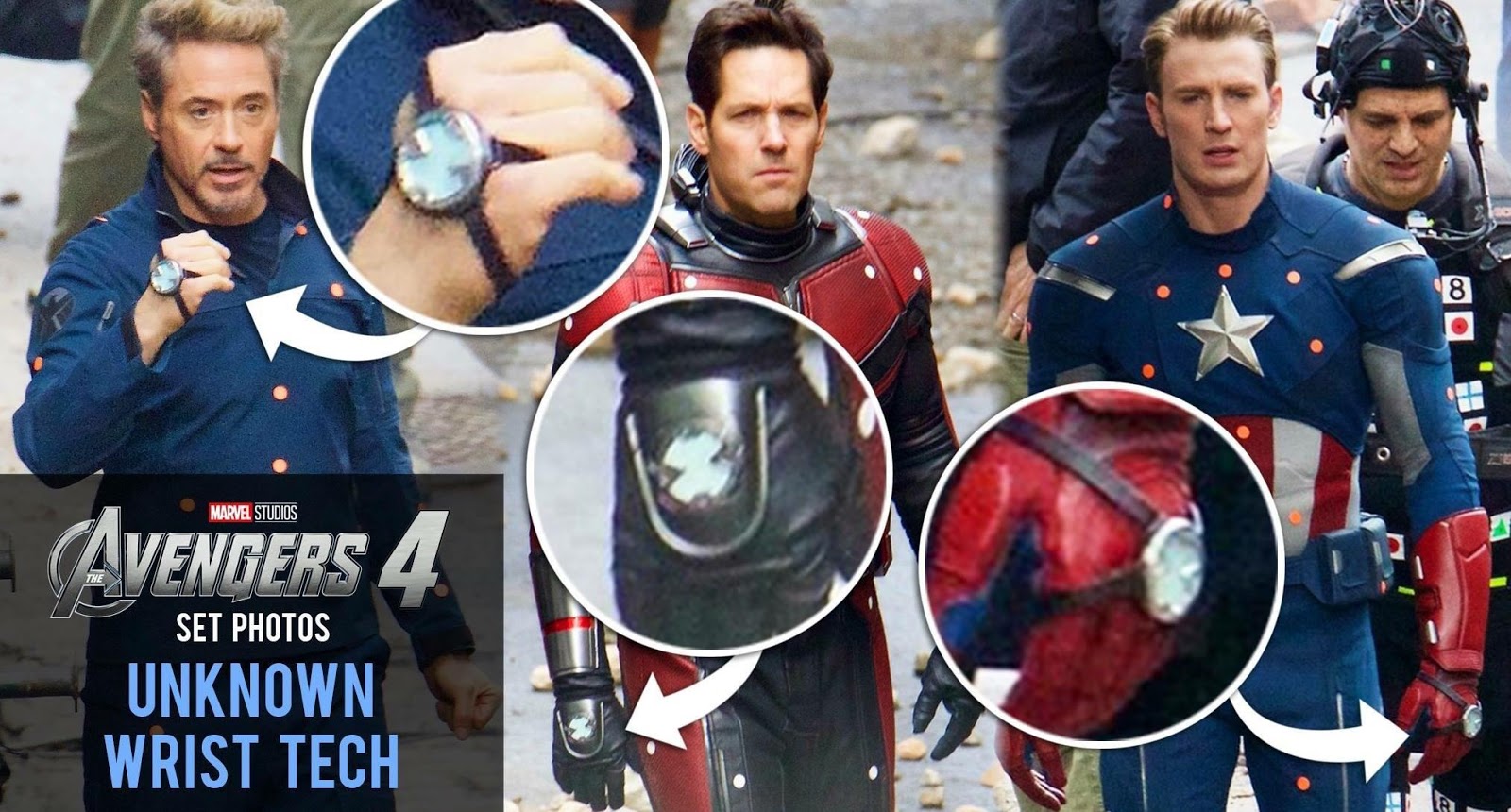
I don't think that's a spoiler for anyone. Set photos hinting at it were leaked a year ago around the same time that Infinity War first came out. As the internet guessed from those photos, the Avengers' plan in Endgame is to go back to several points in the past, including to New York City at the time of Loki's Chitauri invasion, and collect the Infinity Stones so they can undo Thanos's snap with their own Infinity Gauntlet. We get some exposition about how time travel works in this universe, and I think the gist is that changing your past just creates alternate branching timelines instead of changing your future. At least I think that's what I think.

To paraphrase critic Greg Stevens from the Pop Arena YouTube channel, the key to writing good time travel is to not write time travel. More often than not, it just creates plotholes and raises billions of hopeless questions about how it works. The Russos have come forward and addressed a few questions concerning this aspect of the plot (I know, right? They're actually answering questions about Endgame now!), but the fact that any explanation has to be given outside of the film itself shows that there's a flaw in its storytelling.

And for me, this was a huge flaw. I didn't get the least bit emotional the first time I saw Endgame. By my third viewing though, I'd made enough peace with the film's troublesome elements that I could finally appreciate the heartfelt ones. I just hope that wasn't Marvel's plan to squeeze more ticket sales out of anyone.

At the end of the day, I think the best way to approach superhero movies like the MCU is perhaps to think of them as modern-day fairy tales. They're fantastical stories aimed mainly at younger people that teach lessons and have a certain emotional impact, and their logic is kind of beside the point. People today ask why the townsfolk in Beauty and the Beast never wondered what happened to the prince after he became cursed or why Sleeping Beauty's parents didn't put her under constant surveillance on the day of her sixteenth birthday, but the people who first read those stories didn't question those things. The point of those stories was what happened and what the characters did to overcome it, not the how or why, and they're still famous classics to this day. Taking time out of the plot to address questions like that might make those stories more cohesive, but I doubt it would really make them better.

Overall, Avengers Endgame is a very emotionally satisfying conclusion to the MCU's first major story arc, but to quote Sarah Connor, "God, you can go crazy thinking about all this."

Also, if you're worried about Captain Marvel ruining the movie, relax. The Russos didn't go for the head with that blow either.


Tuesday, April 23, 2019

One Strange Scene


As the final clock winds down to Avengers: Endgame, I want to make a last-minute prediction or two on this blog. I don't even know if they're so much predictions for Endgame as much as predictions for the future of the Marvel Cinematic Universe in general. That's because I originally assumed them to be predictions for last year's Avengers: Infinity War, and they ended up never factoring into that movie.

My predictions all center around the scene in Thor: Ragnarok where Thor meets Doctor Strange in New York. The setup for this scene is that Thor just exposed his brother Loki as an imposter who's been posing as their father Odin on Asgard for the last four years, and now he's forcing Loki to bring him to the real Odin on Earth. They can't find him in New York, the place where Loki imprisoned him, and then Doctor Strange shows up and takes them to his Sanctum to question what they're doing on Earth. After some comical banter and slapstick, he sends them to Odin in Norway.


I've had a complicated relationship with Ragnarok ever since it came out, but the one aspect of it that I've actually argued about is this scene. Forget about the Avengers crossovers just for a second; in the context of the single movie Thor: Ragnarok, this scene is completely pointless. It brings the pacing to a halt, nothing that Thor and Doctor Strange talk about comes into play later in the plot, and including Doctor Strange in this story at all just raises questions about why he didn't help to fight the villain when she first showed up on Earth. You could easily rewrite the script to just have Loki know where Odin is and take Thor straight to Norway himself.

What's more, Strange doesn't cross paths with Thor or Loki in Infinity War, so this scene doesn't even work as a setup for future MCU films.

At least not yet.

Strange was one of the characters who died from Thanos snapping his fingers at the end of Infinity War. Since the majority of Endgame's plot will most likely center around the Avengers trying to undo that snap, I suspect that Strange will make a comeback somewhere in the second half of the film. It's also been speculated that Loki, who appeared to die in a more traditional way in Infinity War, will also come back. Perhaps the scene in Ragnarok was a means of introducing him and Thor to Strange in order to set up a two- or three-man teamup between them in Endgame.

Loki and Strange working together especially would be interesting, since having Loki use his powers for good in alliance with someone who once dismissed him as a threat for having them would show all the more how much he's come full circle. In turn, it could show growth on Strange's part by having him acknowledge that a fellow magic user he once dismissed from Earth can have some use if enough need arises for it. Strange's mastery of the Time Stone could also come into play and turn out to be the force behind some of the bizarre circumstances of Loki's (again, we'll say "alleged") death in Infinity War.


If that doesn't happen in Endgame, then there could still be a chance of something along those lines occurring in Phase Four of the MCU. Tom Hiddleston's contract with Marvel Studios is expiring after Endgame, but Chris Hemsworth has said on multiple occasions that he'd be interested in reprising his role as Thor afterwards if possible. Maybe this is a well-disguised spoiler being leaked about Thor's status at the end of Endgame, or maybe it isn't. What we do know is that a Doctor Strange sequel is in the works for Phase Four, so if Hemsworth does end up coming back for that phase, there's a real chance that we might get a Strange-Thor team up after all.

That would make a lot of sense, since their predecessors Odin and the Ancient One who once oversaw the universe have effectively passed on from it. I feel like Thor meeting Doctor Strange in Ragnarok is so beside the point for that movie that it HAS to serve as a setup for something bigger, maybe as a preview of how the future Allfather and Ancient One will interact when protecting the universe post-Endgame.


It's hard to say how far ahead Marvel Studios plans their MCU movies anymore. Given their history with the Infinity Saga though, I'm willing to believe that they have enough foresight to plant seeds five or six movies in advance.

Or maybe that scene in Ragnarok was just an excuse to put more pratfalls in the movie and the studio's still looking for a sequel where they can shoehorn in justification for it. Neither one would surprise me.


Tuesday, March 26, 2019

Hell, Nick Fury, and a Woman Scorned


I have to admit, I went through kind of a bizarre existential crisis leading up to my viewing of this movie.

YouTube has a way of recommending videos that don't really relate to the ones you normally watch, and then bombarding you with videos that DO relate to those recommendations after you watch them. In my case, this meant crossing paths with one video about Captain Marvel star Brie Larson's snarky comments on the excess of "white dude" film critics and how she wants to use Captain Marvel as her form of activism...and then watching dozens of other videos about that, the audience censorship on Rotten Tomatoes for Captain Marvel, Disney's alleged string-pulling to boost the film's box office numbers and review ratings, and how they're trying to hold this "glass-ceiling-shattering" film so high that feminist activists can't see Aliens, The Terminator, Underworld, Resident Evil, The Hunger Games, Wonder Woman, or Alita: Battle Angel in its shadow. And this went on for about a month.

So yeah, I was kind of conflicted about supporting Captain Marvel. I was curious to see the film because of its tie-in to Avengers: Endgame, and I get that Brie Larson just wants equal representation in every aspect of the film industry and only said it in the worst way possible, but all the drama surrounding this movie rubbed me the wrong way. Besides, I've only seen nine of the twenty Marvel Cinematic Universe films that existed before this, and the Avengers crossovers do a pretty good job of recapping things so you don't have to see the other films to understand them. And let's be honest, in today's age of YouTube spoiler reviews and Wikipedia plot summaries, no one has to see any movie anymore to know what happens in it. So really, what need was there to give Captain Marvel a ticket sale -- especially since Disney may or may not be buying enough tickets themselves?
 
Well, in the end, I got invited to a ten-year-old's birthday party to go see the movie, so I caved.

So what do I think of Captain Marvel now that I have seen it?

I don't know if it was intended, but I do think that setting this movie in the 1990's helps to make the whole don't-let-white-dudes-hold-you-down angle feel less ham-fisted. It's a lot more believable, though still debatable, that male air force pilots would be that discriminant against a female pilot back then, as opposed to today. The film doesn't show as many moments of that discrimination as you might think, but there are a few, plus some pretty blatant song choices like No Doubt's "I'm Just A Girl" and one cringeworthy line about how a responsible mother character needs to go along on a potential suicide mission in order to set a better example for her daughter. Although, I don't seem to recall the "I'm kinda done with you telling me what I can't do," line from the teaser trailer being said in the final film.

So yeah, the winks and nods at social justice gender politics throughout the movie can be a bit grating, but I don't think they're so prevalent that they overpower the story.


The story itself is pretty standard. It's an action mystery where Captain Marvel (a.k.a. Carol Danvers) gets stranded on Earth in the 90's and tries to stop aliens from invading it while also trying to remember her past. In Marvel terms, it's like a cross between the first Thor film and Howard the Duck if it starred Wolverine. There's a decent theme of paranoia and not being able to trust people at face value throughout the film, illustrated best by the shape-shifting aliens, and also one big twist that fans of the comics might not expect. Also, I did laugh at the end of the final showdown for basically giving the finger to one really cliched action movie trope. Overall, the story is passable, but it feels more like something you'd see in Phase One of the MCU rather than something you'd see near the end of Phase Three. It just doesn't have the same sharp edge to it that the franchise has evolved since 2008.

And speaking of 2008, it's worth mentioning that Captain Marvel contradicts a few things that were previously established in the MCU. One example is how Fury and Coulson refer to their organization as S.H.I.E.L.D. despite not coming up with that acronym until the end of the first Iron Man a decade later. It's a minor nitpick, but given how good the MCU seemed to be about avoiding those errors until now, I find it telling of how differently the studio approached this film's production.

I also agree with the criticisms that Carol just rising above something that was holding her down without really coming to terms with any of her personal flaws or mistakes is a pretty big narrative misfire. I'm actually curious to see her in Endgame just to see if the Russos course-correct this by making her more reflective.

But much like with Iron Man, the real driving force for Captain Marvel is the cast performances. This has got to be the most likable that Samuel L. Jackson's Nick Fury has ever been in any MCU film. It's almost his origin story, showing how he started out as a lighthearted but levelheaded agent who was quickly forced to become more suspicious and deceptive. It's also pretty funny to see Jackson embrace his dorkier side by baby-talking to a cat and then awkwardly chasing aliens around with it.

Lashana Lynch as Carol's friend Maria Rambeau and Ben Mendelsohn as the villain Talos also do surprisingly good jobs in their roles. Jude Law gives his usual decent performance, and it's nice to see Clark Gregg make his big-screen comeback as Agent Coulson. The only weak link, surprisingly, was Annette Bening as Dr. Mar-Vell. I don't know how, but this movie managed to make a four-time Oscar nominee like her sound like she didn't read the script until an hour before the cameras started rolling.

As for Brie Larson...well...putting aside the way she comes across in real life, I didn't hate her performance, but I didn't like it enough either. She has a lot of good moments, especially in her scenes with Samuel L. Jackson, but I don't think she has enough sincere ones. You can tell Marvel Studios is trying to give her a combination of Tony Stark's humor and Steve Rogers's stoicism, and that makes sense since she's supposed to take their place as the face of the MCU after Endgame. However, Stark and Rogers used those traits largely as fronts, as defense mechanisms to help them cope with their situations. In private moments, we saw that they were more vulnerable, genuine, flawed people. They were fully realized characters, relatable characters, and so were heroines like Black Widow, Gamora, and Scarlet Witch.

What character flaws does Carol Danvers have? The only one I can recall the movie giving is that she's overemotional, but she hardly ever comes across that way. We get a flashback where she discovers that aliens exist when they shoot down her fighter jet, her passenger also turns out to be an alien and then dies from the crash, and she discovers from someone holding her at gunpoint that the fate of an entire race is suddenly in her hands; I don't think her facial expression or tone of voice changes once.

Even in those private moments where the protagonist is supposed to drop their facade, she's still either emotionally distant, snarky, or angry. We never get a satisfactory sense of humanity from her performance because the film seems afraid to make her vulnerable. I don't know if the fault lies with the actor, the director, or just the script again, but it doesn't make me connect with the character enough to really want to see her succeed.

I'm not sure why Marvel Studios is trying so hard to sell us on Captain Marvel. Maybe they're scrambling to outdo Wonder Woman since the DC Extended Universe made a female-led superhero film before they did and that gave DC some competitive traction. Maybe they're also trying to make up for the way they've handled their female characters in the past, such as not bothering to release any Black Widow action figures when Avengers: Age of Ultron came out. That's all just speculation on my part, though. One thing I can say for sure is that Captain Marvel is only groundbreaking in the scope of the MCU itself.

The irony is that looking back on all the drama surrounding this film's marketing, I actually think less may have been more. It's the end of the MCU's Phase Three; the studio doesn't have to work that hard to get viewers into the theaters anymore. There's barely been any advertisement for Endgame, but everyone's rearing to go see that. Heck, the setup for Captain Marvel in Avengers: Infinity War was such a morale booster after that cliffhanger ending that ticket pre-sales for this film were once through the roof. Had Marvel Studios President Kevin Feige and even Brie Larson just taken a step back and let their movie sell itself, I think it would have fared much better. Some people probably still would have complained about the gender politics in the movie afterwards, but most of us would have gone into it more positively.

At the end of the day, I think that Captain Marvel on its own merits is just an average Marvel movie  -- and that's all she wrote.


Wednesday, March 20, 2019

Is "Seinfeld" Offensive Now?


I've mentioned once how my huge love of the Andy Serkis Planet of the Apes movies has managed to never come up in my blog entries before. Something else that I've never mentioned being a huge fan of is the 1990's sitcom Seinfeld. I don't know why, given my taste in movies, but somehow Jerry Seinfeld and Larry David's magnum opus about the silly, meaningless details of everyday life is my absolute favorite TV show.

Well, a friend of mine recently sent me a link to a YouTube show called "Does It Hold Up?", in which modern-day young viewers are shown episodes of older TV shows and asked if they think the shows are still relevant today. The episode my friend sent me had these viewers watching episodes of Seinfeld, and the majority of them found it too offensive to hold up today.

Here's a link to the video if you want to watch it yourself:

https://www.youtube.com/watch?v=r5BxjUmzPPA


And for the record, here's a list of the Seinfeld episodes it discusses:

"The Merv Griffin Show": Jerry, George, and Elaine repeatedly give Jerry's girlfriend medication that makes her drowsy so they can play with her antique toy collection while she's sleeping.

"The Contest": Jerry, George, Elaine, and Kramer have a bet to see who can go the longest without masturbating. The three men make Elaine bet more money than them because "it's easier for a woman not to do it."

"The Soup Nazi": Jerry, George, Elaine, and Kramer frequent a dining establishment run by a short-tempered, ethnically questionable foreign chef.

"The Cigar Store Indian": Jerry keeps accidentally offending his Native American girlfriend and other people of different ethnicities.

"The Hamptons": Jerry's girlfriend accidentally sees George naked after he went swimming and he and Jerry ask Elaine if women know about "shrinkage."

"The Outing": A muckraking reporter believes that Jerry and George are a gay couple and they vehemently deny it while always disclaiming, "Not that there's anything wrong with that."

~

As you can imagine, my knee-jerk reaction while watching the above video was to yell "Serenity Now!" every time someone complained about Seinfeld. My friend even questioned if the group of viewers chosen were a fair representation of modern audiences or if they were just picked because they had the most dramatic reactions. Now that I've had some time to think it over, I want to discuss this more in depth.

For starters, I don't really think you can gauge how well something "holds up" by how offensive it is. Watch any episode of Seinfeld back-to-back with any episode of the currently running sitcom Family Guy. I don't think anyone's going to find Seinfeld more offensive just because it's the older of the two shows. You can argue of course that Family Guy has more leeway because it's a cartoon and that the offensive jokes on that show are more exaggerated and deliberate, whereas Seinfeld's offensive jokes are more grounded and reflective of then-current cultural views. That's not to say that one show is funnier than the other, since humor is subjective and always offensive to some degree. It's just that not every show is made for the same audience.

What does make Seinfeld feel dated at times is the technology depicted onscreen, since things like cell phones, online streaming services, and self-adhesive postage stamps weren't commonplace when the series was made. Jerry not being able to find his friends in a movie theater because they can't text each other isn't offensive, though. What's more, I don't think that featuring outdated technology really lessens a movie or show's entertainment value. Heck, Marvel Studios just released a superhero movie that's a period piece set in the 1990's, and while I have heard complaints about the film, none of them have been about that aspect of it.

Second, I think a lot of people who do find Seinfeld offensive are just missing the point of the show. That point is that you're supposed to laugh at the main characters, not with them. Jerry, George, Elaine, and Kramer are selfish, ignorant, immature people, and the humor comes from how much those flaws hinder them when solving trivial, everyday problems. The show usually calls them out for their bad behavior one way or another, even when they don't get a proper comeuppance; other characters tell them how ridiculous they're being, their significant others dump them when the bad behavior comes to light, and sometimes their bad deeds from older episodes come back to haunt them.

It's like that scene from the movie Borat where the title character spends the night at a B&B run by a Jewish couple, and his antisemitism causes him to frantically throw dollar bills at two insects in his room because he thinks they're the couple who've shape-shifted to sneak in and kill him. It's making fun of ignorant racists like Borat, not the people they're prejudiced against. By the same logic, Seinfeld is making fun of people like Jerry, George, Elaine, and Kramer who are too morally inept to function in society, not the people they wrong in each episode. That's why the series ends with all four of them in prison.

The only episode I can think of that is unapologetically offensive is The Bubble Boy from Season 4. Jerry, Elaine, and George are asked to visit a young man with immune deficiency who has to live in a germ-free plastic enclosure, and because of George's childish stupidity, problems ensue. Not only does the show never address that the three are wrong to be uncomfortable about the "Bubble Boy's" condition (it even mocks the characters who do show him support and sympathy) it also depicts the "Bubble Boy" himself as a nasty, entitled brat who deserves what happens to him. I know that his condition is extremely rare, so not many people would take offense to this episode personally. I also know that Seinfeld wasn't trying to promote ableism with this episode, but the fact that it never really works a disclaimer into the script like most other episodes do is a bit irresponsible for them. Still, one mishandled message doesn't ruin an entire series -- and really, that episode is still funny.


And at the end of the day, I think that's the most important thing to take away from this: the tone of the series overall. You can't get an accurate view of a nine-season sitcom by just watching a handful of cherry-picked episodes. I'll admit that the producers of "Does It Hold Up?" could have shown their subjects far more triggering episodes than the ones they did, but there are plenty of less triggering episodes that they could have shown too. We need to view things in as full of a scope as possible before properly judging them, and TV sitcoms, while mainly a source of entertainment, are no exception. Fortunately, it's easy to view as much of Seinfeld as possible because it still aires daily on practically every TV channel known to man.

And if a show is still doing that more than two decades after it ended, it probably isn't offending too many people.


Thursday, August 23, 2018

Loki of Jotunheim


While we're still on the subject of Loki's (we'll say "alleged") death in Avengers: Infinity War, there's one particular aspect of it that I think is worth discussing. It's actually a major aspect of his overall depiction in the MCU that a lot of fans would like to see the movies address again. I'm talking about Loki's Frost Giant appearance.

As established in the first Thor film, Loki isn't Thor's biological brother, but an adoptive brother who was born as a Frost Giant in the realm of Jotunheim. This means that in his natural form, he has blue skin and red eyes. Coincidentally, his supposed death scene in Infinity War was lit heavily with blue light and Thanos strangling him left Loki with bloodshot eyes. This led many viewers to wonder if the shape-shifting God of Mischief had reverted back into his Frost Giant form because the spell disguising him as an Asgardian wore off as he died.


It's understood now that this wasn't the case, but it does leave us wondering more than ever about the nature of Loki's dual appearance and where it fits into the MCU.

The first Thor is the only film to ever show Loki as a Frost Giant, and the first full reveal of it is a huge moment in that story. What's more, Thor never sees him in that form at any point in the film. Fans have been itching to see Frost Giant Loki again ever since, and who can blame them? It would be a great dramatic peak for Thor and Loki's relationship to have the God of Thunder finally see what his brother really looks like, and it would make Loki's arc feel more complete too since seeing himself in that form the first time was what made him fall from grace.

Some viewers have even cited his remaining in Asgardian form after death as proof that he didn't really die. Others just find it frustrating, sometimes to the point that they wonder if the screenwriters have forgotten about Loki's Frost Giant origins. I'm no expert, but based on what I've seen in the MCU so far, here's my take on everything.


For starters, the screenwriters haven't forgotten about Loki's origins. He introduces himself at one point in both Thor: The Dark World and Infinity War as someone from Jotunheim, and not only does Thor: Ragnarok show his real father Laufey depicted in a ceiling mural, but it also shows a stage play about Loki where a child actor covered head-to-toe in blue paint portrays him as a baby. I'll even offer that maybe Infinity War gave Loki blue lighting and bloodshot eyes for his presumed death as a subtle nod to the fact that he's a Frost Giant.

As for him not turning back into a Frost Giant when he dies, I don't think it's that simple. The only times we see him turn back into one in Thor is whenever he touches another Frost Giant or the Casket of Ancient Winters, and even then the transformation is brief. We also get a flashback where his adoptive father Odin finds him as a baby on Jotunheim and then Loki changes into an Asgardian. Frost Giants don't seem to have any appearance-altering powers, and we learn in The Dark World that Loki received his illusion powers from Odin's wife Frigga later in life. Because of this, we can assume that Odin was the one who originally transformed him into an Asgardian.


And I think that word is the key here: "transformed." I don't think Odin cast a mere disguise over Loki; I think he actually altered Loki's physicality, much like he transformed Thor from an Asgardian into a human while banishing him to Earth in the first film. Loki's Asgardian appearance was a deep-rooted, mostly permanent change that became his default form once it was cast, and Odin was the one who cast it. If Odin's death in Ragnarok didn't make Loki automatically turn back into a Frost Giant, then Loki's death probably wouldn't make that happen either.

Whether or not Loki's still alive, there are plenty of ways that the MCU can show him as a Frost Giant again. I personally like the thought of Thanos using the Reality Stone to taunt Thor with various illusions of his little brother, including one of Loki in his original form. The question is just whether or not the MCU will bother to show that side of Loki again. The character's last appearance will be in Avengers 4, however large or small his role will be, and since that film will most likely have a ton of more important storylines to juggle, it might just decide to close the books on Loki even faster than Infinity War did. He did resolve everything that he needed to in that film, after all.

I'll still hope for Frost Giant Loki to make a final cameo in Avengers 4, just because the films do keep reminding us of his origins, but as a Loki fan, I'm pretty sure he'll always leave us wanting more no matter what the MCU does with him.


Thursday, May 10, 2018

Looking Back on Loki - Part 2


SPOILER ALERT!!

THIS ESSAY WILL ALSO GIVE AWAY THE BEGINNING OF THE AVENGERS: INFINITY WAR. IF YOU HAVEN'T SEEN THE MOVIE YET AND YOU DON'T WANT ANYTHING IN IT TO BE RUINED, SEE IT BEFORE READING THIS.

IF NOT FOR YOUR OWN SAKE, THEN DO IT FOR LOKI'S.

--

Thor: The Dark World (2013)

It's worth mentioning that during this film's post-production, actor Tom Hiddleston appeared in character as Loki at the 2013 San Diego Comic-Con. He "interrupted" a sneak preview of Thor: The Dark World, scolded the crowd for not accepting him as their king the summer before, then vowed to show them the preview if they pledged their loyalty to him. Needless to say, the crowd got their preview and the God of Mischief gained a wildly supportive army that day.

I bring this up because it showed how aware Marvel was of Loki's popularity at the time, as well as how keen they were to play to it. I think that contributed a lot to his role in The Dark World.

The filmmakers knew we wanted to see him turn good and team up with Thor. They knew we debated if and how he would die in future films, and they knew how much we wanted to see him succeed for once. Because of this, there was a real sense that they toyed with our expectations for Loki in the second Thor film, and the end result was perfect for his character.

Loki hit rock bottom in The Dark World. Not only was he disgraced before all of Asgard, but Odin seemed to disown him and left him virtually powerless by imprisoning him. Then, when Loki thought things couldn't get worse, he caused the death of his adoptive mother Frigga. The dark elf Malekith invaded Asgard, and when a henchman named Kurse found Loki in the dungeon, Loki told him the way to the throne room. He did this for revenge on Odin, but it was Frigga that Kurse killed instead.
 
This made Loki snap again. Now there really was no salvaging his life, and with Thanos no doubt hunting him down after his failure on Earth, he knew his days were numbered. This and his rage over Frigga's death made him decide to cooperate when Thor asked him to help stop Malekith. This would only mean temporary freedom for Loki, but that was all he needed to carry out his new plan.

His chance came during a fight between him, Thor, and Kurse on the dark elves' home world. Loki killed Kurse, saving Thor and avenging Frigga, but he was wounded in the process. Thus we got the scene we were expecting where he died dramatically in Thor's arms after redeeming himself. The twist was that it wasn't real.

To my knowledge, it's never been confirmed if Kurse really stabbed Loki, since Loki's powers allowed him to cast illusions of such things. Either way, he wasn't fatally wounded, but he took advantage of Thor's emotional state and faked his own death. Thor was forced to leave him behind and pursue Malekith, one of Odin's guards found Loki, Loki killed the guard and assumed his appearance (possibly even disguising the guard's body as his own), and returned to Odin. After that, he used his powers to trap Odin on Earth, assumed his adoptive father's appearance, and took on a new life as the King of Asgard. At long last, the God of Mischief had succeeded.


What's interesting is that he never sought further revenge on Thor after his brother defeated Malekith and came home. Thor had broken Loki out of prison and committed treason by leaving Asgard, so no one would have questioned a steep punishment for the God of Thunder, but Loki allowed Thor to go free and live happily on Earth with his human friends. Maybe he had made some kind of peace with Thor during their time together, maybe he couldn't properly restrain Thor since he didn't have any of Odin's powers, or maybe he thought that letting Thor leave Asgard on good terms would minimize suspicion towards himself. Whatever the reason, fully pardoning his brother after everything they had put each other through showed growth on Loki's part.


Thor: Ragnarok (2017)

It would take four years for Loki to show up again in the MCU. He was supposed to make a cameo in 2015's The Avengers: Age of Ultron when Thor had a vision of Asgard's destruction, but like a lot of things in that film, he was cut for time. Between that and all the questions that The Dark World had left us with, there was still a good amount of excitement for Loki's comeback in Thor: Ragnarok.

To put it simply, this Thor movie turned out to be very different from the first two. It's said that director Taika Waititi, best known for comedies, was given free reign with Ragnarok, so there ended up being way more emphasis on humor than drama this time around. For Loki, this meant giving us a more cowardly, inept, and silly God of Mischief than we were used to seeing.

In terms of the narrative, this character inconsistency can actually be justified. Loki spent his whole life seeking admiration and eventually power, and once he gained both at the end of The Dark World, he had no goals left to work towards. This caused him to lose a lot of his drive and his edge over the four years he spent disguised as Odin, and not having to worry about Thanos finding him anymore allowed him to become oblivious to the world around him. It made sense that after Thor caught on and exposed him as an imposter at the start of Ragnarok, Loki had to spin his wheels a bit before finding a new direction in life.

He hit rock bottom again after Thor made him take them to the real Odin on Earth. The brothers found their father moments before he died, and although Odin forgave Loki, his death was one betrayal too many for Thor to do the same. The final nail in the coffin came when Thor's half-sister Hela sensed Odin's passing and seized control of Asgard.

The best Loki could think to do was give up on his home again and simply look out for himself. When he and Thor became stranded on the planet Sakaar, he quickly schmoozed his way into favor with its ruler, the Grandmaster. He made one half-hearted attempt to help Thor, mostly so he could brag about his new social status, but when Thor still wanted nothing to do with him, Loki tried to betray his brother for financial gain. Thor outwitted him though, saying that Loki's refusal to be more than the God of Mischief had made him predictable, and escaped back to Asgard without him.

This marked the ultimate turning point for Loki. All his schemes of the past seven years had been for nothing, and having Thor completely give up on him this time made him finally realize what he had ruined between them. What was more, he had no guarantee that he would be safely hidden from Thanos on Sakaar. There was a chance he might die soon anyway, so why not die doing something genuinely admirable?

After making his own escape from Sakaar, Loki took his brother's words to heart and returned to Asgard to help Thor defeat Hela. This involved destroying their home like Thor had foreseen, and it was Loki who set that destruction in motion. Curiously enough, he had to do it in Odin's vault—the same room where he had first learned of his Frost Giant lineage. The ship that he had arrived on allowed Asgard's people to evacuate in time, and Loki further proved his loyalty by joining them on their voyage to Earth. It was during this voyage that he made his peace with Thor and watched his brother assume the role of Asgard's new king.


It seemed like Loki was finally a real hero, but in the midst of it all, he had secretly made another huge mistake in another moment of weakness.


The Avengers: Infinity War (2018)

And that brings us to the grand finale. Infinity War is still less than two weeks old, and it's already broken the record as the fastest movie to ever gross $1 billion at the box office. It's well on its way to becoming the highest grossing film of all time, and I think that's largely because of how many upsetting character deaths occur throughout the plot. Fans want to figure out how the next Avengers film will resolve things, if it even can, and a good way to look for clues is by watching Infinity War again. And if that doesn't work, then at least they'll get the most out of what could be their favorite characters' final appearances on the big screen.

The film is shocking and bleak, and Loki's death in the opening scene sets that tone perfectly.

His huge mistake at the end of Ragnarok was stealing the Tesseract from Odin's vault before he escaped from Asgard. Loki did this on impulse as well, not because he wanted a peace offering for Thanos, but because he remembered how powerful the device was and couldn't resist the thought of possessing it again. Now that the Tesseract was away from Asgard though, Thanos could sense the Infinity Stone inside of it and was able to track down the Asgardians' ship in space. The Mad Titan boarded their ship, and in a horrible twist of irony, half the people that Loki had helped to rescue were slaughtered before his eyes.

Even then he wouldn't hand over the Tesseract, since he knew what his enemy meant to do with the stone inside. It wasn't until Thanos started torturing Thor in front of him that Loki revealed the device, though he still didn't give up. He stalled for time so the Hulk could attack Thanos, and when the Hulk lost that fight, Loki attempted to finish the job himself.

Loki often defeated opponents by distracting them with illusions of himself and then striking from behind. However, he didn't do that this time; perhaps he decided he was through with hiding. Instead he faced Thanos himself, pretended to offer his services again, and tried to stab his former ally in the throat. Sadly, the God of Mischief really had become predictable, and after stopping the blow, Thanos lifted him into the air by his neck while Thor watched helplessly. Loki declared that the Mad Titan would never be a god, then Thanos killed him with one squeeze. The last we saw of Thor's little brother was his body lying on the floor while the God of Thunder grieved over him.


~

I've heard complaints that this sendoff for Loki was anticlimactic, but I disagree. The scene pretty much covered all the bases it needed to for his story arc: proving that he valued his brother's life more than his own ambition, having him team up with two of the Avengers to an extent, showing that he'd accepted his past by stating he was Odin's son but not an Asgardian, and letting him get in a few last tricks and interesting lines. I even kind of like that his death was so simple and blunt this time. He already had an epic sci-fi spectacle death in the first Thor film and a dramatic Shakespearean death in the second, so it was fitting that his third death had none of those theatrics. That sold the reality of it so much more.

As for killing him in the first scene, I understand why it was done. We needed a reason to personally hate Thanos, and the film needed to show us how high the stakes had grown. Also, I'm not sure what else the writers could've done with Loki in this film. What made him so interesting was his moral conflict, the question of whether or not he would become one of the heroes. When he did that at the end of Ragnarok, he completed his arc. If he'd survived and been just another good guy throughout Infinity War, I think he would've been a lot less interesting, and if he'd become a villain or a double agent again, I think it would've felt too contrived. Besides, his death became Thor's main motivation to destroy Thanos, and since this was brought up multiple times, it still felt like Loki had a presence throughout the film.

Production photos of the fourth Avengers movie have surfaced since Infinity War's release. Because they appear to take place during the events of the first film and feature the characters wearing mysterious wrist devices, fans have speculated that the story will involve time travel to undo the final moments of Infinity War. It's possible that Loki could "return" that way, with Thor encountering a past version of his brother. There's also hope that he might come back from the dead as a result of the Avengers meddling with the past.

Personally, I think the best way to bring him "back" would be in spirit, with Thor either using the Infinity Stones to connect with him or by dying as well. It'd be a fitting and poignant end for the God of Thunder to sacrifice himself for the universe and then have his brother lead him to Valhalla as a reward. We'll just have to wait and see.

If this is the last time we'll ever see Loki, I'll close with this: When he first saw himself as a Frost Giant, he wondered if he was cursed. He was right in a way. His curse was that for all the cunning and strategic thinking he possessed, his emotions were always what ended up dictating his choices. In this regard, he was more like Thor than he wanted to believe, and since he never had the same opportunity as Thor to learn self-control, his emotions continued to sabotage him at every turn. When he saved the Tesseract from destruction on a whim, the penalties of this curse became cataclysmic.

Still, there was a way Loki could have kept the Tesseract out of Thanos's hands. All he had to do was keep it cloaked in invisibility, refuse to say its location, and let Thanos kill Thor. That would have been the more sensible choice in the grand scheme of things, since Thanos wanted the Infinity Stones to "save" the universe by committing genocide. However, Loki's emotions pushed him to reveal the device in exchange for his brother's life.

Several other characters, mostly the heroes, had to choose between someone's life and an Infinity Stone throughout the film. Most of them gave up the stone to spare the person's life. The only willing exception was Thanos, who tortured one of his own children and killed another to claim a stone. Loki may never have quite been a hero, but in the end, he had more in common with the heroes than he did with the villain. The son of Odin who had once tried to kill his brother and save Asgard by also committing genocide had replaced his rage with compassion, and his emotions made the better choice as a result.

In the end, Loki understood the value of life, and that's no curse.


Sunday, May 6, 2018

Looking Back on Loki - Part 1


Well, it's been a little over a week since the premiere of The Avengers: Infinity War, and like many fans, I'm still reeling from the film and pondering what to expect in its sequel. I feel like enough time has passed that most people who wanted to see the movie already have, so a spoiler warning might not be needed, but to be safe, here's mine:

SPOILER ALERT!!

THE ESSAY YOU'RE ABOUT TO READ WILL GIVE AWAY THE BEGINNING OF INFINITY WAR.

YES. THIS MOVIE IS SUCH A COLOSSALLY EPIC ENDGAME THAT EVEN THE BEGINNING CAN BE RUINED.

--

With that said, I want to talk again about my favorite character, Loki. He's one of the Marvel Cinematic Universe's oldest, most pivotal, and most popular figures, as well as one of its most compelling villains. That's why it came as a huge shock to a lot of viewers, including myself, when the Mad Titan Thanos abruptly killed him in the opening scene of Infinity War. It's probably one of the top three saddest deaths in the whole film, which is no small feat, so I'm writing this two-part essay as an in-memorium of sorts. It's a film-by-film look back on Loki's story arc throughout the series that hopefully does justice in showing what a terrific character he was.

We have five movies to discuss, so in the words of the late God of Mischief, "Send the rest."


Thor (2011)

According to screenwriter Zack Stentz, Marvel Studios gave the writers of the first Thor film a very specific instruction: "Give us a villain as good as Magneto." Magneto was the villain of the original X-Men film trilogy, and his goal was to wipe out humanity so that his people, the mutants, could inherit the Earth. This didn't stem just from a feeling of superiority over humans, but also from the horrors he endured as a child in a Nazi concentration camp. Magneto's goal was to protect his new people from those who distrusted them, which he couldn't do during the Holocaust, and the hate that drove him to pursue this goal turned him into the same monster that he was trying to defeat. He was a villain who thought he was the hero, and no one could tell him otherwise.

With this in mind, the writers of Thor gave us Loki. As Thor's jealous, overlooked younger brother, his goal was to lie, scheme, and manipulate in order to keep the God of Thunder from becoming King of Asgard. This type of villain may have seemed like a tired trope at first, but the writers knew how to make him more engaging as the story unfolded.

Hence, we got a scene where Loki discovered that he wasn't Thor's brother at all; he was the abandoned son of the Frost Giant Laufey, Asgard's enemy, and Thor's father Odin took him in as a baby and turned him into an Asgardian to raise him. What's more, when Loki confronted Odin about this, we learned that his adoption wasn't strictly an act of kindness. Odin also wanted to raise Laufey's son on Asgard as a way to eventually bring peace between their races. It just happened to involve lying to Loki about who and what he was for most of his life while always showing him less favor than Thor for reasons he couldn't understand.


If I had to pinpoint the exact moment when the whole Loki fan train started, it would probably be that scene. His tragic backstory was the kind that the protagonist usually had in a superhero film, not the antagonist, and Odin's flimsy explanation for keeping it a secret really made viewers side with Loki in that moment. And that's the core of what won us over. We could side with Loki. Unlike with Magneto, who was always pitted against people with a clear moral high ground, we were made to see Loki's view of everything very early on and could genuinely believe he was in the right.

Thor would make a terrible king. He was a complete loose canon who almost got Asgard into a full-scale war with the Frost Giants, and Loki getting him banished to Earth was probably the safest way to keep things from escalating. Loki didn't even really want to be king in Thor's place. He just didn't want the only home he'd ever known to be placed in the hands of an idiot.

It wasn't until much later in the film, after he'd learned the truth about himself, that we learned Loki's new goal. Along with wanting to protect Asgard, he now wanted to have Thor killed on Earth and impress Odin by wiping out the Frost Giants. He wanted to set up a crisis that would prompt Asgard to end their truce with Laufey, and with Thor gone, he would be the one to defeat their enemy. He would be the hero that everyone in Asgard admired.


If this had been Loki's goal from the start, we might have felt differently about him, but we saw what made him snap and decide to do this. That gave us hope that he could be reasoned with and brought back to his senses before going through with his plan. In the end though, he couldn't be reasoned with, and after Thor saved the day and Loki saw Odin's disappointment in him, he abandoned his home and sent himself hurtling into a black hole in space to his supposed death. Everything he had ever known was a lie and he saw no way to salvage it, so in a moment of weakness, he gave up.


The Avengers (2012)

Released one year after Thor, The Avengers was one of the biggest movies of the 2010's. Not only had it been hyped up for four years with a string of prelude films, but it ended up being every bit the action-packed, crowd-pleasing popcorn blockbuster that it had promised to be. It's made Marvel Studios pretty much the king of the box office to this day, and since Loki came back as the villain in The Avengers, he was bound to leave way more of an impact on viewers this time around.

And of course, he did. I would daresay he even gained a bigger overall fanbase than any of the heroes after this movie. It's easy to see why too; he was working towards a different goal from all the other characters, so he stood out, and since he had an underdog backstory, you still kind of rooted for him. Also, it was entertaining as hell to watch him try and maintain his dignity throughout his increasingly hilarious defeats. Loki had the same insecurities and emotional conflict as before, but instead of being depressed about his shortcomings, he was trying to stay confident and enthusiastic. You kind of had to admire that.

This wasn't to say though that Loki was totally eager to conquer the Earth in The Avengers. One of the human characters, Agent Coulson, even observed that the God of Mischief didn't have enough conviction in what he was doing for him to succeed. I didn't read many fan theories at the time, but my understanding was that Thanos found Loki floating in space after Thor, recruited him, offered him the chance to prove himself by stealing the Tesseract from Earth, and Loki took that offer in exchange for being allowed to rule Earth afterwards. He made this deal somewhat impulsively; he was still angry at Thor, so taking over the planet that his brother had grown to love sounded like the perfect revenge at the time. Loki soon realized that he was in over his head with Thanos, but it was too late to back out of the deal by then. We even got a scene in The Avengers where Loki was told that Thanos would torture him beyond imagination if he failed to complete his mission.

If Loki wanted to survive, he would have to reinvent himself and fully embrace his conquest of Earth—the "glorious purpose" that he was now burdened with. This seemed to work at first, so much that his mission even delighted him at times, but then Thor came to stop him. That was what stirred up Loki's conflicted feelings again and made him start to lose momentum. Thor wasn't just ordering him to give up his mission, he was offering to bring him home and help him pick up the pieces of his old life. It was extremely tempting, but since Loki still yearned for respect and feared punishment from Thanos, he did whatever he could to remove that temptation. That was why he tried to kill Thor in the middle of the film and then stabbed him during the climax when Thor was starting to get through to him. He didn't have the conviction to win those arguments otherwise.

Not that any of it paid off in the end. The Avengers defeated Loki's invasion army, the Hulk wiped the floor with him, and Thor took both his brother and the Tesseract to Asgard to be locked up forever. This was actually where Loki's story arc in the films was supposed to end, but once Marvel saw how much the fans loved him, they knew they had struck gold with this character. They had a villain who was better than Magneto now, at least from a marketing standpoint. They had a charming, mysterious, and sympathetic villain who added genuine dramatic weight to Thor's storyline even at the silliest of times. If they wanted to keep making successful Thor movies, then they had to keep Loki around.


To be continued in Part 2...