Showing posts with label film. Show all posts

Sunday, May 12, 2024

Return to the Planet of the Apes


Well, here's a review I never expected to be writing. 

That's not because I've been severely absent from my blog since 2019, but because I figured the Planet of the Apes reboots had ended seven years ago with a conclusion that was pretty solid and pretty final. The main protagonist of those reboots had died after all, and the last film had set things up in a way that could easily bring us full circle back to the events of the original 1968 film. What else could there be to cover?

Well, in the spirit of its subject matter, this franchise just showed us again that evolution is a never-ending process. As long as humans and hyper-intelligent apes share a planet, they'll keep finding newer and bigger problems to have with each other — and for screenwriters to write about.

And that's what's so interesting about these reboots: each installment jumps years ahead of the previous one to show us a new stage in the apes' history, so we get to see exactly how they and their problems are evolving. It also gives us the chance to explore a lot of the same themes and ideas from new perspectives since the power dynamics between humans and apes keep shifting. This latest film, Kingdom of the Planet of the Apes, actually has a fairly similar plot to War for the Planet of the Apes, except that the delusional villains who enslave the hero's people this time are other apes and we get a character who's sort of a human version of Koba.

Speaking of characters from the first three films, Caesar, Maurice, Rocket, and a few others have cameos in Kingdom's prologue, but that's it. This film is both a sequel and a soft reboot that jumps ahead "many generations later" to give us a new cast of characters, including a new chimp protagonist named Noa. I'm assuming the writers gave him that name as an allegory since he literally has to save his people from a flood at one point in the film.

We get tons of new world-building this time around. We get a new orangutan character who also steals the show. We get our first mention of gibbons in the whole franchise. We even get a surprise appearance from William H. Macy for some reason, although no casting choice in this series will ever be as much of a head-scratcher as Kris Kristofferson in the Tim Burton film. And of course, we get lots of action, lots of nods to the original film, and even more of what's still some of the best character CGI put to film. All in all, Kingdom is a fun ride.

So how does it fair as a Planet of the Apes film?

As I mentioned before, this installment treads new ground by giving us a large-scale ape vs. ape conflict and also seeming to play with a few allegories. The main villain is an ape who goes by the name Proximus Caesar, a cult leader/dictator whose goal is to advance ape-kind into the planet's dominant race by forcing humans to share the secrets of their history and technology. He's presumably done his research on the name Caesar, since he often references the Roman Empire, but his preachings on the values of Caesar the ape are either sorely mistaken or deliberately twisted in order to brainwash his followers and serve his own corrupt agenda. There's some obvious social, political, and religious commentary there, with Caesar the ape even having become a savior-like figure in the eyes of the current ape clans. Just like its predecessors though, Kingdom handles this commentary with a subtle enough hand to avoid the traps that a lot of other movies fall into these days. 

The same goes for the human side of the conflict. Kingdom gives us a strong female character done right in the form of Mae, a teenage girl who manages to stay engaging and somewhat sympathetic throughout the plot even as her deception and prejudice against the apes slowly reveals itself. She's not doing what she does to be evil, she's doing it because her world has been shattered by the apes and she hasn't seen enough of their good side to accept that there are shades of gray in the struggle around her. Again, obvious commentary that's handled well. What's more, the movie ends her arc on a note that seems to suggest further development from her character if she returns in any sequels. 

I will say though that Kingdom is probably still the weakest of the Apes reboots. Noa isn't as compelling of a protagonist as Caesar, the supporting ape characters (aside from Raka the orangutan) aren't as memorable as the ones from the previous films, and the pacing could stand to speed up in many places. Still, calling a film the weakest entry in this series is like saying The Two Towers is the weakest Lord of the Rings film. It's still something to be proud of.

As a minor nitpick though, if it's even canon, the Planet of the Apes Wiki claims that Proximus is a bonobo just like Koba. Why keep making bonobos the bad guys? They're way less aggressive than common chimpanzees and way more endangered. And could this series please give us a gorilla character who doesn't get killed off? They've been through enough! 

All in all, it's nice to make my own return of sorts alongside Planet of the Apes. I don't know how long we'll have to wait for the next installment, or if any more will come after this, but like the titular apes, I've seen enough strength and evolution along the way to be hopeful for the future.

And remember: if you ever tell Maurice the orangutan that gingers have no souls, he'll simply steal yours.

Thursday, May 10, 2018

Looking Back on Loki - Part 2


SPOILER ALERT!!

THIS ESSAY WILL ALSO GIVE AWAY THE BEGINNING OF THE AVENGERS: INFINITY WAR. IF YOU HAVEN'T SEEN THE MOVIE YET AND YOU DON'T WANT ANYTHING IN IT TO BE RUINED, SEE IT BEFORE READING THIS.

IF NOT FOR YOUR OWN SAKE, THEN DO IT FOR LOKI'S.

--

Thor: The Dark World (2013)

It's worth mentioning that during this film's post-production, actor Tom Hiddleston appeared in character as Loki at the 2013 San Diego Comic-Con. He "interrupted" a sneak preview of Thor: The Dark World, scolded the crowd for not accepting him as their king the summer before, then vowed to show them the preview if they pledged their loyalty to him. Needless to say, the crowd got their preview and the God of Mischief gained a wildly supportive army that day.

I bring this up because it showed how aware Marvel was of Loki's popularity at the time, as well as how keen they were to play to it. I think that contributed a lot to his role in The Dark World.

The filmmakers knew we wanted to see him turn good and team up with Thor. They knew we debated if and how he would die in future films, and they knew how much we wanted to see him succeed for once. Because of this, there was a real sense that they toyed with our expectations for Loki in the second Thor filmand the end result was perfect for his character.

Loki hit rock bottom in The Dark World. Not only was he disgraced before all of Asgard, but Odin seemed to disown him and left him virtually powerless by imprisoning him. Then, when Loki thought things couldn't get worse, he caused the death of his adoptive mother Frigga. The dark elf Malekith invaded Asgard, and when a henchman named Kurse found Loki in the dungeon, Loki told him the way to the throne room. He did this for revenge on Odin, but it was Frigga that Kurse killed instead.
 
This made Loki snap again. Now there really was no salvaging his life, and with Thanos no doubt hunting him down after his failure on Earth, he knew his days were numbered. This and his rage over Frigga's death made him decide to cooperate when Thor asked him to help stop Malekith. This would only mean temporary freedom for Loki, but that was all he needed to carry out his new plan.

His chance came during a fight between him, Thor, and Kurse on the dark elves' home world. Loki killed Kurse, saving Thor and avenging Frigga, but he was wounded in the process. Thus we got the scene we were expecting where he died dramatically in Thor's arms after redeeming himself. The twist was that it wasn't real.

To my knowledge, it's never been confirmed if Kurse really stabbed Loki, since Loki's powers allowed him to cast illusions of such things. Either way, he wasn't fatally wounded, but he took advantage of Thor's emotional state and faked his own death. Thor was forced to leave him behind and pursue Malekith, one of Odin's guards found Loki, Loki killed the guard and assumed his appearance (possibly even disguising the guard's body as his own), and returned to Odin. After that, he used his powers to trap Odin on Earth, assumed his adoptive father's appearance, and took on a new life as the King of Asgard. At long last, the God of Mischief had succeeded.


What's interesting is that he never sought further revenge on Thor after his brother defeated Malekith and came home. Thor had broken Loki out of prison and committed treason by leaving Asgard, so no one would have questioned a steep punishment for the God of Thunder, but Loki allowed Thor to go free and live happily on Earth with his human friends. Maybe he had made some kind of peace with Thor during their time together, maybe he couldn't properly restrain Thor since he didn't have any of Odin's powers, or maybe he thought that letting Thor leave Asgard on good terms would minimize suspicion towards himself. Whatever the reason, fully pardoning his brother after everything they had put each other through showed growth on Loki's part.


Thor: Ragnarok (2017)

It would take four years for Loki to show up again in the MCU. He was supposed to make a cameo in 2015's The Avengers: Age of Ultron when Thor had a vision of Asgard's destruction, but like a lot of things in that film, he was cut for time. Between that and all the questions that The Dark World had left us with, there was still a good amount of excitement for Loki's comeback in Thor: Ragnarok.

To put it simply, this Thor movie turned out to be very different from the first two. It's said that director Taika Waititi, best known for comedies, was given free reign with Ragnarok, so there ended up being way more emphasis on humor than drama this time around. For Loki, this meant giving us a more cowardly, inept, and silly God of Mischief than we were used to seeing.

In terms of the narrative, this character inconsistency can actually be justified. Loki spent his whole life seeking admiration and eventually power, and once he gained both at the end of The Dark World, he had no goals left to work towards. This caused him to lose a lot of his drive and his edge over the four years he spent disguised as Odin, and not having to worry about Thanos finding him anymore allowed him to become oblivious to the world around him. It made sense that after Thor caught on and exposed him as an imposter at the start of Ragnarok, Loki had to spin his wheels a bit before finding a new direction in life.

He hit rock bottom again after Thor made him take them to the real Odin on Earth. The brothers found their father moments before he died, and although Odin forgave Loki, his death was one betrayal too many for Thor to do the same. The final nail in the coffin came when Thor's half-sister Hela sensed Odin's passing and seized control of Asgard.

The best Loki could think to do was give up on his home again and simply look out for himself. When he and Thor became stranded on the planet Sakaar, he quickly schmoozed his way into favor with its ruler, the Grandmaster. He made one half-hearted attempt to help Thor, mostly so he could brag about his new social status, but when Thor still wanted nothing to do with him, Loki tried to betray his brother for financial gain. Thor outwitted him though, saying that Loki's refusal to be more than the God of Mischief had made him predictable, and escaped back to Asgard without him.

This marked the ultimate turning point for Loki. All his schemes of the past seven years had been for nothing, and having Thor completely give up on him this time made him finally realize what he had ruined between them. What was more, he had no guarantee that he would be safely hidden from Thanos on Sakaar. There was a chance he might die soon anyway, so why not die doing something genuinely admirable?

After making his own escape from Sakaar, Loki took his brother's words to heart and returned to Asgard to help Thor defeat Hela. This involved destroying their home like Thor had foreseen, and it was Loki who set that destruction in motion. Curiously enough, he had to do it in Odin's vaultthe same room where he had first learned of his Frost Giant lineage. The ship that he had arrived on allowed Asgard's people to evacuate in time, and Loki further proved his loyalty by joining them on their voyage to Earth. It was during this voyage that he made his peace with Thor and watched his brother assume the role of Asgard's new king.


It seemed like Loki was finally a real hero, but in the midst of it all, he had secretly made another huge mistake in another moment of weakness.


The Avengers: Infinity War (2018)

And that brings us to the grand finale. Infinity War is still less than two weeks old, and it's already broken the record as the fastest movie to ever gross $1 billion at the box office. It's well on its way to becoming the highest grossing film of all time, and I think that's largely because of how many upsetting character deaths occur throughout the plot. Fans want to figure out how the next Avengers film will resolve things, if it even can, and a good way to look for clues is by watching Infinity War again. And if that doesn't work, then at least they'll get the most out of what could be their favorite characters' final appearances on the big screen.

The film is shocking and bleak, and Loki's death in the opening scene sets that tone perfectly.

His huge mistake at the end of Ragnarok was stealing the Tesseract from Odin's vault before he escaped from Asgard. Loki did this on impulse as well, not because he wanted a peace offering for Thanos, but because he remembered how powerful the device was and couldn't resist the thought of possessing it again. Now that the Tesseract was away from Asgard though, Thanos could sense the Infinity Stone inside of it and was able to track down the Asgardians' ship in space. The Mad Titan boarded their ship, and in a horrible twist of irony, half the people that Loki had helped to rescue were slaughtered before his eyes.

Even then he wouldn't hand over the Tesseract, since he knew what his enemy meant to do with the stone inside. It wasn't until Thanos started torturing Thor in front of him that Loki revealed the device, though he still didn't give up. He stalled for time so the Hulk could attack Thanos, and when the Hulk lost that fight, Loki attempted to finish the job himself.

Loki often defeated opponents by distracting them with illusions of himself and then striking from behind. However, he didn't do that this time; perhaps he decided he was through with hiding. Instead he faced Thanos himself, pretended to offer his services again, and tried to stab his former ally in the throat. Sadly, the God of Mischief really had become predictable, and after stopping the blow, Thanos lifted him into the air by his neck while Thor watched helplessly. Loki declared that the Mad Titan would never be a god, then Thanos killed him with one squeeze. The last we saw of Thor's little brother was his body lying on the floor while the God of Thunder grieved over him.


~

I've heard complaints that this sendoff for Loki was anticlimactic, but I disagree. The scene pretty much covered all the bases it needed to for his story arc: proving that he valued his brother's life more than his own ambition, having him team up with two of the Avengers to an extent, showing that he'd accepted his past by stating he was Odin's son but not an Asgardian, and letting him get in a few last tricks and interesting lines. I even kind of like that his death was so simple and blunt this time. He already had an epic sci-fi spectacle death in the first Thor film and a dramatic Shakespearean death in the second, so it was fitting that his third death had none of those theatrics. That sold the reality of it so much more.

As for killing him in the first scene, I understand why it was done. We needed a reason to personally hate Thanos, and the film needed to show us how high the stakes had grown. Also, I'm not sure what else the writers could've done with Loki in this film. What made him so interesting was his moral conflict, the question of whether or not he would become one of the heroes. When he did that at the end of Ragnarok, he completed his arc. If he'd survived and been just another good guy throughout Infinity War, I think he would've been a lot less interesting, and if he'd become a villain or a double agent again, I think it would've felt too contrived. Besides, his death became Thor's main motivation to destroy Thanos, and since this was brought up multiple times, it still felt like Loki had a presence throughout the film.

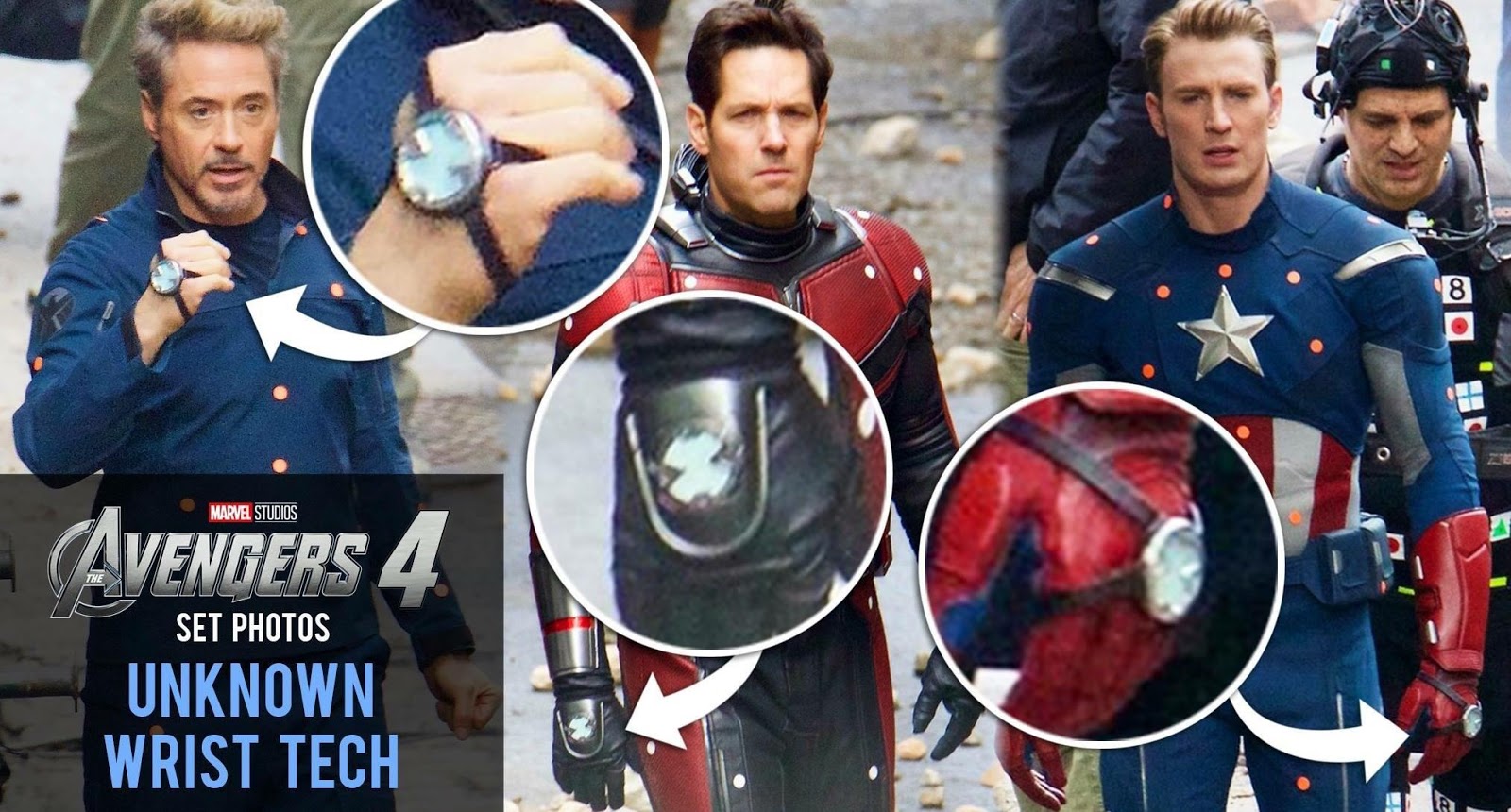
Production photos of the fourth Avengers movie have surfaced since Infinity War's release. Because they appear to take place during the events of the first film and feature the characters wearing mysterious wrist devices, fans have speculated that the story will involve time travel to undo the final moments of Infinity War. It's possible that Loki could "return" that way, with Thor encountering a past version of his brother. There's also hope that he might come back from the dead as a result of the Avengers meddling with the past.

Personally, I think the best way to bring him "back" would be in spirit, with Thor either using the Infinity Stones to connect with him or by dying as well. It'd be a fitting and poignant end for the God of Thunder to sacrifice himself for the universe and then have his brother lead him to Valhalla as a reward. We'll just have to wait and see.

If this is the last time we'll ever see Loki, I'll close with this: When he first saw himself as a Frost Giant, he wondered if he was cursed. He was right in a way. His curse was that for all the cunning and strategic thinking he possessed, his emotions were always what ended up dictating his choices. In this regard, he was more like Thor than he wanted to believe, and since he never had the same opportunity as Thor to learn self-control, his emotions continued to sabotage him at every turn. When he saved the Tesseract from destruction on a whim, the penalties of this curse became cataclysmic.

Still, there was a way Loki could have kept the Tesseract out of Thanos's hands. All he had to do was keep it cloaked in invisibility, refuse to say its location, and let Thanos kill Thor. That would have been the more sensible choice in the grand scheme of things, since Thanos wanted the Infinity Stones to "save" the universe by committing genocide. However, Loki's emotions pushed him to reveal the device in exchange for his brother's life.

Several other characters, mostly the heroes, had to choose between someone's life and an Infinity Stone throughout the film. Most of them gave up the stone to spare the person's life. The only willing exception was Thanos, who tortured one of his own children and killed another to claim a stone. Loki may never have quite been a hero, but in the end, he had more in common with the heroes than he did with the villain. The son of Odin who had once tried to kill his brother and save Asgard by also committing genocide had replaced his rage with compassion, and his emotions made the better choice as a result.

In the end, Loki understood the value of life, and that's no curse.


Sunday, May 6, 2018

Looking Back on Loki - Part 1


Well, it's been a little over a week since the premiere of The Avengers: Infinity War, and like many fans, I'm still reeling from the film and pondering what to expect in its sequel. I feel like enough time has passed that most people who wanted to see the movie already have, so a spoiler warning might not be needed, but to be safe, here's mine:

SPOILER ALERT!!

THE ESSAY YOU'RE ABOUT TO READ WILL GIVE AWAY THE BEGINNING OF INFINITY WAR.

YES. THIS MOVIE IS SUCH A COLOSSALLY EPIC ENDGAME THAT EVEN THE BEGINNING CAN BE RUINED.

--

With that said, I want to talk again about my favorite character, Loki. He's one of the Marvel Cinematic Universe's oldest, most pivotal, and most popular figures, as well as one of its most compelling villains. That's why it came as a huge shock to a lot of viewers, including myself, when the Mad Titan Thanos abruptly killed him in the opening scene of Infinity War. It's probably one of the top three saddest deaths in the whole film, which is no small feat, so I'm writing this two-part essay as an in-memorium of sorts. It's a film-by-film look back on Loki's story arc throughout the series that hopefully does justice in showing what a terrific character he was.

We have five movies to discuss, so in the words of the late God of Mischief, "Send the rest."


Thor (2011)

According to screenwriter Zack Stentz, Marvel Studios gave the writers of the first Thor film a very specific instruction: "Give us a villain as good as Magneto." Magneto was the villain of the original X-Men film trilogy, and his goal was to wipe out humanity so that his people, the mutants, could inherit the Earth. This didn't stem just from a feeling of superiority over humans, but also from the horrors he endured as a child in a Nazi concentration camp. Magneto's goal was to protect his new people from those who distrusted them, which he couldn't do during the Holocaust, and the hate that drove him to pursue this goal turned him into the same monster that he was trying to defeat. He was a villain who thought he was the hero, and no one could tell him otherwise.

With this in mind, the writers of Thor gave us Loki. As Thor's jealous, overlooked younger brother, his goal was to lie, scheme, and manipulate in order to keep the God of Thunder from becoming King of Asgard. This type of villain may have seemed like a tired trope at first, but the writers knew how to make him more engaging as the story unfolded.

Hence, we got a scene where Loki discovered that he wasn't Thor's brother at all; he was the abandoned son of the Frost Giant Laufey, Asgard's enemy, and Thor's father Odin took him in as a baby and turned him into an Asgardian to raise him. What's more, when Loki confronted Odin about this, we learned that his adoption wasn't strictly an act of kindness. Odin also wanted to raise Laufey's son on Asgard as a way to eventually bring peace between their races. It just happened to involve lying to Loki about who and what he was for most of his life while always showing him less favor than Thor for reasons he couldn't understand.


If I had to pinpoint the exact moment when the whole Loki fan train started, it would probably be that scene. His tragic backstory was the kind that the protagonist usually had in a superhero film, not the antagonist, and Odin's flimsy explanation for keeping it a secret really made viewers side with Loki in that moment. And that's the core of what won us over. We could side with Loki. Unlike with Magneto, who was always pitted against people with a clear moral high ground, we were made to see Loki's view of everything very early on and could genuinely believe he was in the right.

Thor would make a terrible king. He was a complete loose canon who almost got Asgard into a full-scale war with the Frost Giants, and Loki getting him banished to Earth was probably the safest way to keep things from escalating. Loki didn't even really want to be king in Thor's place. He just didn't want the only home he'd ever known to be placed in the hands of an idiot.

It wasn't until much later in the film, after he'd learned the truth about himself, that we learned Loki's new goal. Along with wanting to protect Asgard, he now wanted to have Thor killed on Earth and impress Odin by wiping out the Frost Giants. He wanted to set up a crisis that would prompt Asgard to end their truce with Laufey, and with Thor gone, he would be the one to defeat their enemy. He would be the hero that everyone in Asgard admired.


If this had been Loki's goal from the start, we might have felt differently about him, but we saw what made him snap and decide to do this. That gave us hope that he could be reasoned with and brought back to his senses before going through with his plan. In the end though, he couldn't be reasoned with, and after Thor saved the day and Loki saw Odin's disappointment in him, he abandoned his home and sent himself hurtling into a black hole in space to his supposed death. Everything he had ever known was a lie and he saw no way to salvage it, so in a moment of weakness, he gave up.


The Avengers (2012)

Released one year after Thor, The Avengers was one of the biggest movies of the 2010's. Not only had it been hyped up for four years with a string of prelude films, but it ended up being every bit the action-packed, crowd-pleasing popcorn blockbuster that it had promised to be. It's made Marvel Studios pretty much the king of the box office to this day, and since Loki came back as the villain in The Avengers, he was bound to leave way more of an impact on viewers this time around.

And of course, he did. I would daresay he even gained a bigger overall fanbase than any of the heroes after this movie. It's easy to see why too; he was working towards a different goal from all the other characters, so he stood out, and since he had an underdog backstory, you still kind of rooted for him. Also, it was entertaining as hell to watch him try and maintain his dignity throughout his increasingly hilarious defeats. Loki had the same insecurities and emotional conflict as before, but instead of being depressed about his shortcomings, he was trying to stay confident and enthusiastic. You kind of had to admire that.

This wasn't to say though that Loki was totally eager to conquer the Earth in The Avengers. One of the human characters, Agent Coulson, even observed that the God of Mischief didn't have enough conviction in what he was doing for him to succeed. I didn't read many fan theories at the time, but my understanding was that Thanos found Loki floating in space after Thor, recruited him, offered him the chance to prove himself by stealing the Tesseract from Earth, and Loki took that offer in exchange for being allowed to rule Earth afterwards. He made this deal somewhat impulsively; he was still angry at Thor, so taking over the planet that his brother had grown to love sounded like the perfect revenge at the time. Loki soon realized that he was in over his head with Thanos, but it was too late to back out of the deal by then. We even got a scene in The Avengers where Loki was told that Thanos would torture him beyond imagination if he failed to complete his mission.

If Loki wanted to survive, he would have to reinvent himself and fully embrace his conquest of Earththe "glorious purpose" that he was now burdened with. This seemed to work at first, so much that his mission even delighted him at times, but then Thor came to stop him. That was what stirred up Loki's conflicted feelings again and made him start to lose momentum. Thor wasn't just ordering him to give up his mission, he was offering to bring him home and help him pick up the pieces of his old life. It was extremely tempting, but since Loki still yearned for respect and feared punishment from Thanos, he did whatever he could to remove that temptation. That was why he tried to kill Thor in the middle of the film and then stabbed him during the climax when Thor was starting to get through to him. He didn't have the conviction to win those arguments otherwise.

Not that any of it paid off in the end. The Avengers defeated Loki's invasion army, the Hulk wiped the floor with him, and Thor took both his brother and the Tesseract to Asgard to be locked up forever. This was actually where Loki's story arc in the films was supposed to end, but once Marvel saw how much the fans loved him, they knew they had struck gold with this character. They had a villain who was better than Magneto now, at least from a marketing standpoint. They had a charming, mysterious, and sympathetic villain who added genuine dramatic weight to Thor's storyline even at the silliest of times. If they wanted to keep making successful Thor movies, then they had to keep Loki around.


To be continued in Part 2...


Wednesday, March 28, 2018

Whatever Happened to Dilophosaurus?


With its twenty-fifth birthday and its latest sequel both coming up this summer, I recently went back and rewatched the film Jurassic Park. It's obviously a beloved classic, and because of its success and popularity, all of its sequels have derived heavily from it. This includes featuring a lot of the same dinosaur species that appeared in the first film,  but there's one species in particular that's been curiously absent in the sequels. That species is the Dilophosaurus.

I can understand if a docile, barely involved species like Triceratops or Gallimimus never made a comeback after the first film (which they have, by the way), but why would one as memorable as the frilled, venom-spitting Dilophosaurus be left out? It's one of the most iconic looking dinosaurs in the whole movie, and it's the only species besides the T-Rex and the Velociraptors that actually kills someone. Heck, it's one of the only dinosaur species in the film that actually lived during the Jurassic Period. What's especially odd is that Dilophosaurus has appeared in several Jurassic Park video games and even had a cameo as a hologram in the fourth film, so it's not like the franchise has disowned it.

The only thing I can figure is that the filmmakers were leery about featuring the species in the sequels. I have two theories for why that is.

1. Too Overpowering

The central conflict in the Jurassic Park series is Man versus Nature. It's about mankind having to use all of its technology and intellect in a struggle for control over forces of nature that it was never meant to exist alongside. If the writers routinely feature a dinosaur species that can launch projectile weapons from its mouth, then they're essentially giving the dinosaurs guns. That's pretty much the end of the story; evasion has always been the human characters' strongest survival tactic against the dinosaurs, and pitting them against a predator that can cause harm from a distance would rub out that advantage and probably take a lot of the tension and thrill out of those scenes.

You wouldn't get as many of those exciting chases or harrowing moments where the predator's teeth or claws narrowly miss a character. If a Dilophosaurus sees someone and they're in spitting distance of it, then that person's dead. End of scene. One of the most entertaining parts of a Jurassic Park film is seeing the dinosaurs throw their weight around and cause physical damage, and a dinosaur that can spit venom at its opponents just wouldn't do something like that. I think the screenwriters were aware of this and found Dilophosaurus a lot less interesting to write about than the other dinosaur species as a result.

Speaking of other species, you could argue that its abilities actually make Dilophosaurus more dangerous than the T-Rex or the Velociraptors. Once again, those species are only as deadly as their ability to catch people, and Dilophosaurus doesn't share that limitation. If the movies threw it into the mix more often, I think there'd be a real risk of it eventually overshadowing T-Rex and Velociraptor as the biggest threat in the narrative. In fact, one of the reasons why it had such a small role in the first film was so viewers wouldn't confuse it with the Velociraptors due to their similar size. Dilophosaurus was only meant to be a side attraction with a gimmick in the story, not a major player, so the screenwriters may have felt they were better off not using it anymore.

2. Too Inaccurate

I'm sure this is news to no one, but the Dilophosaurus in real life didn't have any of the frills of its movie counterpart -- so to speak. It didn't have a neck frill that it flashed to scare enemies, and it didn't spit venom. That was all creative licensing on the part of author Michael Crichton and the filmmakers behind Jurassic Park. There's nothing inherently wrong with this, but because of the timing of the first film's release and its cultural impact, it shaped the way that a lot of people viewed dinosaurs back then. Unfortunately, this also meant that it gave those people a lot of misconceptions about dinosaurs, and paleontologists have been trying to set the record straight ever since.

We've all heard the criticisms about the movie. "T-Rex's eyesight wasn't really based on movement," "Velociraptors weren't really that big," "Brachiosaurus couldn't really stand on its hind legs," etc. People rightly pointed out the inaccuracy of the Dilophosaurus's neck frill and venom as well, but unlike with the other dinosaur species, this one's inaccuracies were the most memorable things about it in the movie. Because of that, Dilophosaurus's biggest claim to fame for a while seemed to be that it was That Dinosaur That Jurassic Park Got Wrong. I actually remember reading children's books about dinosaurs that specifically called out the movie for this false depiction. Not exactly a ringing endorsement.

To its credit, the series has tried to make its dinosaur designs a little more true to science since the first film. Most notably, it gave the Velociraptors feathers in the third film to reflect the discovery that raptors did have plumage in real life. It's possible that since a more realistic makeover for Dilophosaurus would involve stripping away all of the trademarks that the series gave it, the filmmakers may have just decided to not bring it back.


Whether or not these theories are correct, neither one seems to be the case anymore. Not only do we see a hologram of Dilophosaurus in the fourth film, but a tour video in that film mentions that the glass of the visitor vehicles is impervious to the predator's venom. This all seems to suggest that there is a Dilophosaurus exhibit in the newer park, or at least a Dilophosaurus population somewhere on the island. As if that isn't enough, it's now been confirmed that the species is supposed to finally make its comeback in the flesh in the upcoming fifth film.

Again, if my theories are correct, then why is it coming back now? I think it's because the Jurassic Park franchise has, for lack of a better word, evolved since its debut twenty-five years ago. Instead of being more ominous and philosophical, the films are now more lighthearted and adventurous. They don't take themselves as seriously anymore, so audiences today see them as something that's just trying to be entertaining, not as something that's trying to change the face of paleontology. And of course, the series carries a lot of nostalgia behind it now which the newer films clearly enjoy playing to. This could mean that the creative team behind the fourth film always planned to bring back the Dilophosaurus at some point, but maybe wanted to tease or even gauge the audience with a few nods to it first.

It would be interesting to see if the new film addresses Dilophosaurus's absence up to this point. It might even be able to make an in-joke or two about the species, saying perhaps that their frills and venom came from an early gene splicing experiment and that the old park had actually lied about scientists believing that the species had those features. I have a feeling we won't get any explanation, but really, just getting to see Dilophosaurus onscreen again after a quarter of a century would be more than enough for a lot of Jurassic Park fans.

And if its comeback should turn out to be disappointing, don't worry. It will always have that one terrific moment in the film that started it all.


Goodbye, Newman. That's one magic loogie.


Wednesday, February 28, 2018

"Batsh!t" Teaser Trailer

Check it out! Here's the first teaser trailer for Batsh!t, a horror/comedy/mystery film I've been storyboarding. Principal photography begins in August of this year.


Wednesday, May 17, 2017

Unbalanced Duos


I recently got reacquainted with the first three Pirates of The Caribbean films, or as I tend to call them, the two good ones and that one that you have to watch to give the second film an ending. The third film, At World's End, certainly has a lot of cringe-worthy elements for a lot of fans, but one of the elements that bothers me most is the arc of one of my favorite characters, Ragetti.

Don't get me wrong. His overall arc from a mumbling, dog-like sidekick to a cheeky, erudite badass is fascinating. What bothers me about his character arc in the third film though is how much more of one he gets than his partner-in-crime Pintel. Practically every scene in At World's End that features these two has Ragetti upstaging Pintel, getting the spotlight without him, and generally being treated like he's a way more important character.

The problem with this is that before At World's End, these characters were introduced and always presented as a duo. We see duos all the time in movies like this, often as comic relief, and their purpose for being a duo is that they offset each other. They can have a leader and follower dynamic, but the two characters are supposed to work together and be of equal value in the story. Giving more attention and development to just one of them over the course of the narrative can reduce the other duo member to a pointless character, which is what happens to Pintel in At World's End.

Pintel and Ragetti aren't the only character duo in film to have balancing issues. Fans of the Hobbit films often point out how much more focus the dwarf Kili gets over his brother Fili despite them being a pair. The roles of Merry and Pippin in The Lord of the Rings are pretty equal in the books and don't change much in the films, but it's clear from the staging and editing that the filmmakers liked Pippin more. I even think that Jake in the first Blues Brothers movie gets the spotlight a few too many more times than Elwood. Why does this happen?

In some cases, it may be in response to fan preference. Jake Blues was played by John Belushi in the original Blues Brothers sketches on Saturday Night Live, and Belushi was a more energetic performer than his costar Dan Aykroyd. Because of this, Jake was probably more memorable and more liked by viewers than Elwood, so the writers decided to give Jake more material when it came time to write the film. Similarly, Ragetti's wooden eyeball and more sympathetic portrayal in the first Pirates of the Caribbean probably made him stand out more than Pintel, so the writers expanded his role in the sequels to appease fans.

Another reason why duos lose their balance could be that one member just shows more potential for personal growth. Kili, Pippin, and even Ragetti are the younger and more naive halves of their duos, so they naturally have more to learn and more growing up to do. That often speaks more to writers, which is fine, but as the writer, you have to do something with the other duo member to offset the more compelling one's growth. Duo characters are usually together because they have a unique and firm understanding of one another, so any notable change that one of them undergoes is going to affect the other.


I think one of the best examples of a film duo done right is the droids R2-D2 and C-3PO from Star Wars. Their personalities are strong and distinct enough not only to complement each other when they're together, but also to make both of them interesting when they're apart. They each get a fair amount of alone time in the spotlight, but neither one ever outgrows the other because they're kind of designed to need each other.

R2-D2 is pretty much the only character that C-3PO can rant and complain around without getting dismissed, and C-3PO is the only major character who can always translate what R2-D2 is saying. Each one can only achieve his full character potential when the other is present because they're the only characters who fully allow one another to have a voice. They're equal opposites who complete each other -- a whirring, beeping, blue and gold yin yang.

The simplest advice I can think of for writing a good, balanced duo is to almost think of it like adopting twins. If you're going to bring a pair into the picture instead of just one character, then you need to be willing to raise both of them. Explore and celebrate the bond that they have, encourage them to be individuals but not to forget each other, and above all else, treat them fairly.


Sunday, April 30, 2017

No One Gastons Like Gaston


I know I wrote pretty favorably of the new Beauty and the Beast film in my last entry. I even went so far as to call it superior to the 1991 original in a lot of ways, but now that the hype over this version is calming down and I've seen it again, I think it's only fair to discuss at least one of the ways that it pales in comparison. Changing anything in a remake is a gamble, and when it comes to changing something about a character, the results can be hit or miss. Sadly, I think that the new film's version of Gaston is a miss.

The whole point of Gaston's character is that he's the same way that the Prince/Beast was before meeting Belle. He's shallow, selfish, brutish, boastful, and simple-minded. He's also meant to be the epitome of everything that's wrong with the people in Belle's town, as is shown by how much they admire him for having all of those above mentioned qualities. In short, his character needs to be instantly unlikeable and impossible to take seriously.

Just look at his introduction scene in the original film, where we see him shooting ducks out of the sky in the middle of town. Killing hapless animals by the sack-load paints a lousy enough picture of his character, but the fact that he's doing it in the middle of a crowded village where the birds could fall on anyone illustrates how inconsiderate he is even to the people who admire him. You know right away what kind of a person he is.

In contrast, the new film instantly misses the point of Gaston by making him a war hero who's returning home from battle. I guess the idea was to give the townspeople a more realistic reason for admiring him so much, but Gaston's contribution to the story's theme is supposed to be that he's stupid and selfish. It makes little sense that someone like that could achieve the rank of captain in the military and even less sense that he would risk his life to serve his country in the first place. The film tries to explain that he joined the war effort because he likes fighting, and it can be argued that he also likes bossing around subordinates and receiving medals for his exploits, but as we saw in the original film, there are easier ways for a sociopath to channel his bloodlust.

This sacrifice of character for the sake of realism can be seen all throughout Gaston's screen time in the new version. Two other examples of it are the scenes where he attempts to woo and propose to Belle. In the original film, he goes about it in his usual narcisistic way, bragging about himself and paying no attention to Belle's input because he assumes she adores him. He tosses her favorite book into the mud and casually says that women getting ideas from reading is bad for them, then he assembles an entire wedding outside her house before even proposing to her because he can't imagine why she wouldn't say yes. He's so unabashedly pig-headed that you can't help but be entertained by him.

The new film scales back both of these scenes so much that they actually make Gaston's character inconsistent. He begins his first talk with Belle by offering her flowers and complimenting the book that she's reading, which he admits that he hasn't read himself. Not only does this make him seem sensitive and even humble to some degree, but it contradicts his lines in the song "Belle" where he clearly explains that he only values Belle's beauty and doesn't care about her personality. Gaston shouldn't be making any effort to impress her; he should think that his mere presence is enough to win her over.

The proposal scene takes this even further. In addition to scrapping the whole preemptive wedding setup, the scene has Gaston argue his case to Belle by pointing out that unmarried women in their town become beggars when their fathers die. It's such a compelling argument that Belle can't even offer a good rebuttal. This kind of logic and tact simply doesn't work coming from a character who spends one of his first scenes hitting on his own reflection with all seriousness.

What makes all of this so unfortunate is that these inconsistencies, along with Gaston's more subtle portrayal, make him totally unmemorable in the new film. I either don't know what his character is about or I find him so underwhelming that I tune him out altogether. Heck, he gets out-shined by his sidekick in a song called "Gaston" that's supposed to be all about him and how great he is, and Gaston's own contributions to that song are so low-key that they seem to sap energy out of the scene. That doesn't make a good villain.


I don't blame actor Luke Evans for this portrayal of the character. He gave the performance that he was told to give and the idea behind it simply didn't translate well. That seems to be a flaw with a lot of these recent Disney remakes; story elements, pivotal moments, and characters themselves either get rushed or watered down for some reason and a lot of their emotional resonance gets lost as a result. I still think there are plenty of very good things in the new Beauty and the Beast, but there were three core characters that it had to get right, and at best, it only managed that with two. I don't like to disagree with the beautiful beast that is Meat Loaf, but when this happens in a remake of a beloved classic, two out of three can sometimes be a little bad.


Sunday, March 19, 2017

Top 5 Plot Holes the New "Beauty and the Beast" Fixes


Well, Disney just released their newest live-action remake of an animated classic with Beauty and the Beast this past weekend, and judging from the film's reception so far, we can probably expect a lot more remakes from them in the future. I'll admit I was hesitant to see this one at first, not because I object to remaking Beauty and the Beast, but because the previews didn't make this version seem any different from the 1991 animated film. Why pay $11 for a theater ticket when I can watch my VHS of the original for free?

But just like Belle with the castle's West Wing, curiosity got the better of me and I went to see the new film. Not only did it turn out to be an entertaining remake, but it also turned out to be a smart remake that fixes a lot of the original's problems. Fairy tales by nature are riddled with plot holes and the 1991 Beauty and the Beast, while still a great film, is riddled with them too. With that said, here are my top five examples of how the new version fills those holes with some real world logic.


5. How did Belle get the Injured Beast Back to the Castle?


After a violent encounter with the Beast about halfway through the 1991 film, Belle flees from the castle and gets attacked by wolves in the forest. The Beast fights off the pack, but gets badly injured in the process and passes out with no one but Belle to help him. She does get him back to the castle, but aside from one shot of her leading her horse through the woods with the unconscious hero slung over its back, we don't see how she manages that. How does a lone 17-year-old woman get what must be at least a 600-pound heap of dead weight onto a horse's back? It's the animated equivalent of not showing how the explorers moved unconscious King Kong from his island onto their boat; just because it's minor to the story doesn't mean we don't have questions about it.

The new Beauty and the Beast resolves this by keeping the Beast awake after fighting off the wolves. He collapses from his injuries, but he has enough strength left to help Belle get him onto the horse. Having him awake and struggling instead of unconscious also adds tension to the scene when Belle is debating whether to help him or finish her escape, since there's still a chance that he may be dangerous to her as well. All in all, this version of the scene makes some moments simpler and others more complex in a way that keeps it engaging but not as distracting.


4. What Happened to the Townspeople at the End?


This is more of a loose plot thread than a plot hole, but it's still an enormous missing piece that merits addressing. In the climax of the 1991 version, the villain Gaston leads an angry mob of townspeople to the Beast's castle where they do battle with all of the enchanted objects inside. We see a few minutes of people getting beaten up by furniture and appliances in funny, creative ways, then the people retreat and the focus settles on Gaston fighting the Beast on top of the castle. Gaston eventually falls to his death, then Belle and the Beast break the curse, everything goes back to normal, and the happy couple closes out the film by dancing together in the castle with all of the re-humanized servants gathered around them.

The only thing missing in all of this is what happened to the rest of the townspeople after they retreated. Are we meant to believe that they just went back to their normal lives after failing to kill the creature that Gaston made them so afraid of? If they were fearful enough of the Beast to invade his home in the first place, wouldn't they be fearful enough now that they might spread word of the demonic castle and come back in greater numbers? I guess it wouldn't matter since they would discover upon returning that the Beast is human again, but the film totally ignores these questions because of "Happily ever after."

The new version answers these questions by showing the townspeople come back to the castle right after the climax is over. They discover that the Beast and his servants were humans all along, and then they join the celebration at the end. The new film wraps up the storylines of hundreds of characters that the 1991 version didn't even care about, and it gets a lot of humorous and poignant moments out of them for it. What's more, it doesn't take all that much time to do any of this, which further enforces that Beauty and the Beast is about more than just a handful of core characters.


3. Why Doesn't Anyone Wonder What Happened to the Prince?


One of the more common complaints about the 1991 version is that nobody in Belle's town ever seems to wonder why they haven't seen or heard from the prince in years when his castle is so close to their homes. He's their ruling monarch, isn't he? At the very least, he's a local prominent figure whose dealings would probably be heard about in nearby settlements like theirs, so why doesn't anyone find it odd or try to investigate when he suddenly disappears from the public eye?

Again, the new version makes quick work of resolving this. A line in the opening narration explains that the enchantress who cursed the castle also erased its existence and the existence of the people inside it from the memories of everyone in the outside world, ensuring that nobody would come and try to help the prince. This is further demonstrated when the townspeople return to the castle after the curse is broken and begin recognizing the characters who had been cursed.

It's arguably the greatest overall shortcoming of the 1991 version that it doesn't treat the townspeople like they're really people. Maybe that was the idea since they're supposed to be too simple for Belle's taste and it does create an ironic contrast with the more humanized characters in the castle, but it vilifies them for basically just wanting to protect their homes and families from something beyond their understanding. They're easily misled, but in the spirit of the story, I think it was smart of the new film to link their sheeplike mentalities with the curse and show that they can change their ways once someone like Belle opens their minds.


2. Where Did All of the Cursed People Come From?


Another question that viewers often raise about the 1991 film is how there could be so many people in the castle who were turned into talking objects. Practically every single kitchen utensil, light fixture, cleaning supply, and piece of furniture in sight has the ability to move, which means that every single one had to have been a living thing originally. Were there seriously thousands of servants working in the castle when it was cursed? Were some of those objects actually birds and rodents that just happened to be on the roof or in the dungeon at the time? No explanation is ever given.

In the new movie though, we learn that the prince liked to host extravagant balls for thousands of guests and was in the middle of hosting one when the enchantress came to his door. This clears up the issue by showing that most of the enchanted objects were once visitors who normally wouldn't have been in the castle. Things like this go a long way in grounding the story in reality, which is important to do in modern adaptations of fairy tales.

Also, having so many of the curse victims not belong in the castle is likely why the screenwriters came up with the idea of erasing the outside world's memories of them. If this is the case, then this solution is especially good because it fixes two plot holes for the price of one.


1. How Long Does the Curse Last?


We all know how the prince came to be cursed in the 1991 film: an old woman came to his door seeking shelter, he turned her away because she was ugly, and she revealed herself to be the enchantress and turned him into a monster as punishment. Her terms were that if he could learn to be kind and find true love by his twenty-first birthday, the curse would be lifted. His time with Belle takes place in the days leading up to his twenty-first birthday, but one line in the song "Be Our Guest" reveals that the Beast and all of his housemates have been under their curse for ten years. Do the math, and you realize that the prince was only eleven years old when he turned away the enchantress.

Not only does this raise all sorts of questions about why a child of the royal family was allowed to answer the door alone and whether he even deserved to be punished for turning away a stranger, it also creates an inconsistency. You can't argue that the 1991 Beast started as a child and grew into an adult during his time under the curse because the portrait of his human self that he destroys shows him as an adult, not as the child that he should have been at the time when it was painted. The timeframe of the curse is often regarded as the biggest pothole in the 1991 version, and fortunately, the new version does fix it.

How do they fix it? By making the prince an adult to begin with and never actually saying how much time the characters spend under their curse. The writers even change the line in "Be Our Guest" from "Ten years we've been rusting" to "Too long we've been rusting" to keep the amount of time ambiguous. Unlike with Belle getting the injured Beast back to his castle, the remake knew that the curse's duration was an insignificant detail and eliminated that detail altogether.

--

It's kind of funny how easily the new Beauty and the Beast fixes these problems from the original. I don't know how the writing process for the remake went, but it almost feels like the screenwriters went online and studied every YouTube video, message board rant, and fan article about the original's plot holes beforehand and then made a point to address each one in their script. Filmgoers are a lot more keen to scrutinize movies these days, so filmmakers have to be more scrutinizing of their products while making them -- and in the case of the screenplay, they did well with this one.

But if you were wondering, the Beast still doesn't get a name in this version. That's a mystery that's going to remain as old as time.


Friday, November 18, 2016

"Godfather Syndrome" in Movies


It's no news to anyone that movie sequels tend to pale in comparison to their original films. This can be disappointing enough to fans, but it can be all the more disappointing when a film has at least one good sequel and then a bad one. It gives us a false sense of security, a belief that the creative minds behind a franchise can do no wrong, and that makes it feel almost like a betrayal when a bad sequel finally comes along.

We've seen this happen in series like Terminator, The Dark KnightScream, Shrek, and dozens of others, but the odd thing that a lot of those franchises seem to share is that they didn't start to go bad until their third installment. This occurrence is so common that it's even come to be called "Godfather Syndrome" after one of its most infamous casualties. Why is the third time not the charm in so many franchises? The reasons vary, though a few trends do seem to crop up.

One frequent cause of Godfather Syndrome, of course, is studio interference. The second film in a series is often made as an experiment to see how fans of the original will respond to sequels. If that experiment is a huge success, like the sequel Aliens was, the studio tends to apply more pressure on the filmmakers for the next sequel in order to take the most advantage of the franchise's popularity. The result in this case was Alien 3, which had its release date announced before the script was finished and had to severely compromise its story, effects, and most other creative aspects in order to meet that deadline. There's also the case of Spider-Man 3, where the studio forced director Sam Raimi to include a popular villain from the comics despite his story already having two other villains in it. In the end, each franchise was left with a third film that most fans consider to be a convoluted letdown.

Another common cause of Godfather Syndrome is a change in the creative team behind a film series. Filmmakers have changing passions just like any other type of artist, so it's rare for them to remain involved with a franchise to the same extent throughout its entire run. However, if the director, writer, or any other major player hands the reins to someone new in between films, the change in style is usually noticeable. This isn't necessarily a bad thing, but if the key visionaries in a film series are replaced after making the first two films, a lot of their understanding of the series's themes, character arcs, and overall identity is at risk of being lost in Part 3.


For instance, the original X-Men trilogy saw a change in director from Bryan Singer to Brett Ratner for its third film X-Men: The Last Stand, and this led to a huge shift in the presentation. Major characters acted nothing like themselves, subtle undertones were replaced with ludicrous action set pieces, and storylines set up in the previous films were either badly mishandled or dropped altogether. This sequel simply didn't mesh with its predecessors, and when that happens with the third film of a trilogy that follows an ongoing story arc, it can cheapen all three films.

Probably the most disheartening cause of Godfather Syndrome, however, is when the original creators themselves simply lose their touch. Just look at the syndrome's namesake, the Godfather trilogy. The Godfather Part III was written and directed by Francis Ford Coppola just like the first two films, but more than a decade had passed in between the release of Part II and the beginning of Part III's production. No storyteller is going to have the same style or perspective after such a long time, and even though Part III tried to center itself around this idea of time changing people, the fact remained that it didn't feel like a Godfather film.

In other cases, the writers run out of ideas within the scope of the series's universe after two movies and they expand the scope too much in the third one. That's why we got a third Pirates of the Caribbean film that barely took place in the Caribbean and had more characters and storylines in it than a George R.R. Martin daydream.

These aren't even the only three causes of Godfather Syndrome. Sometimes if the second movie in a series ends in a cliffhanger, the third movie gets bogged down with having to resolve those plot threads while also telling its own story. Other times the franchise starts to become self-aware after the second film's reception and panders more in the third installment. And then there are instances where a third film isn't inherently bad, but the second film was just so good that no other sequel can measure up to it. All three of these factors seem to afflict Return of the Jedi, and while it often gets hailed as the weakest film in the original Star Wars trilogy, I really don't know any Star Wars fans who hate it.

Bottom line, making any good film is something of a cinematic miracle. It takes a perfect storm of things going right in order for the product to turn out well, and unless that film is Part 1 of a preplanned story arc, every one of those things has to go right all over again for each sequel to turn out the same way. If a franchise is lucky enough to make that happen more than once, it probably can only make it happen twice -- but that doesn't stop Hollywood from trying at least three times. We fans may see Godfather Syndrome as a stab in the back from the film world, but in the words of The Godfather (and also, sadly, the third Pirates of the Caribbean film), "It's nothing personal. It's just business."